
Chicago Auto Show 2026
A Compact Show with Big Lessons in Experiential Design
We didn’t attend the 2026 Chicago Auto Show to evaluate horsepower or compare trim packages. We went to study something else entirely: the environments brands build, the stories they tell, and how experiential design connects with audiences. Read below for our takeaways from the event.
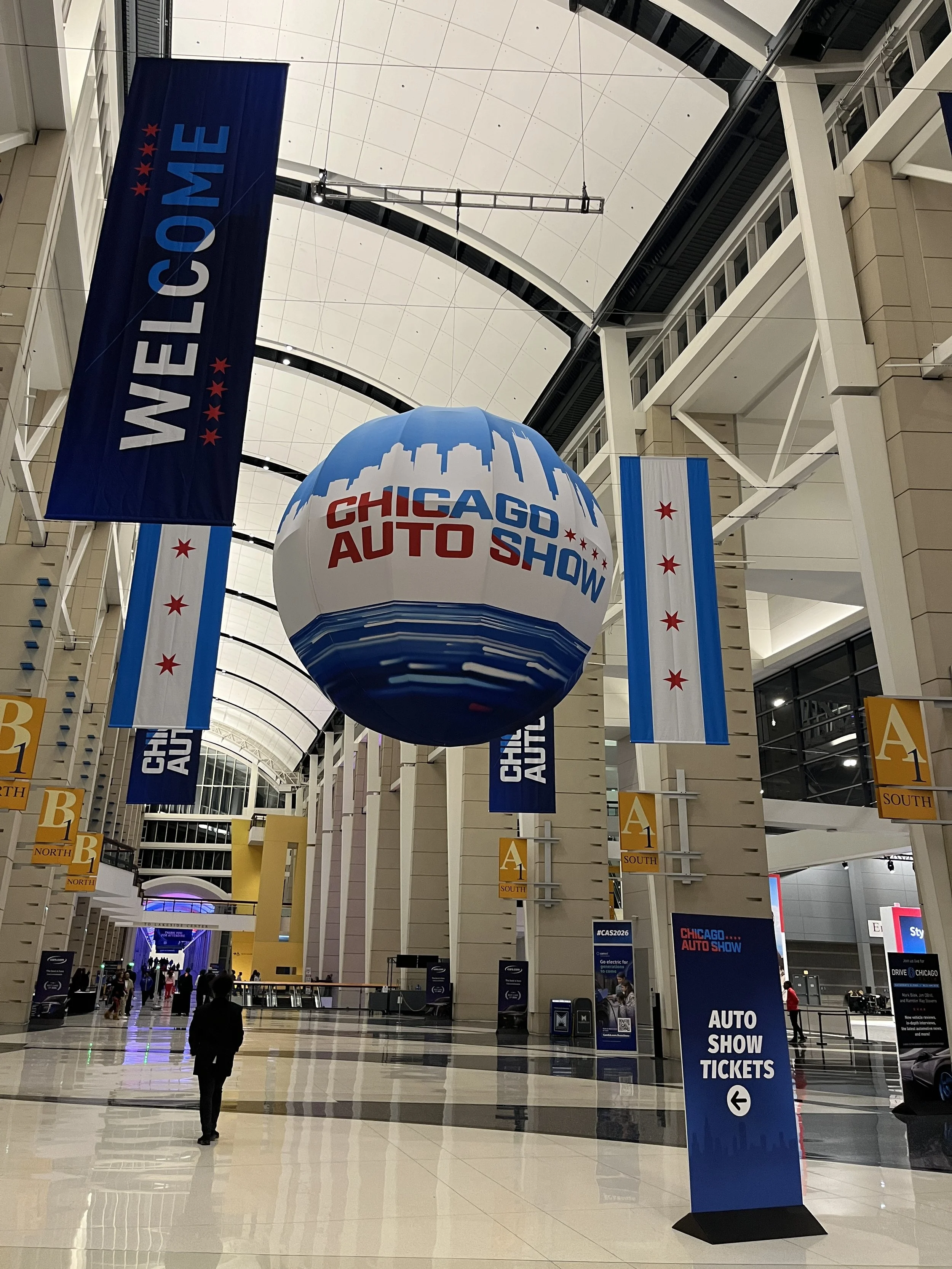
Electric Vehicles Steal the Spotlight
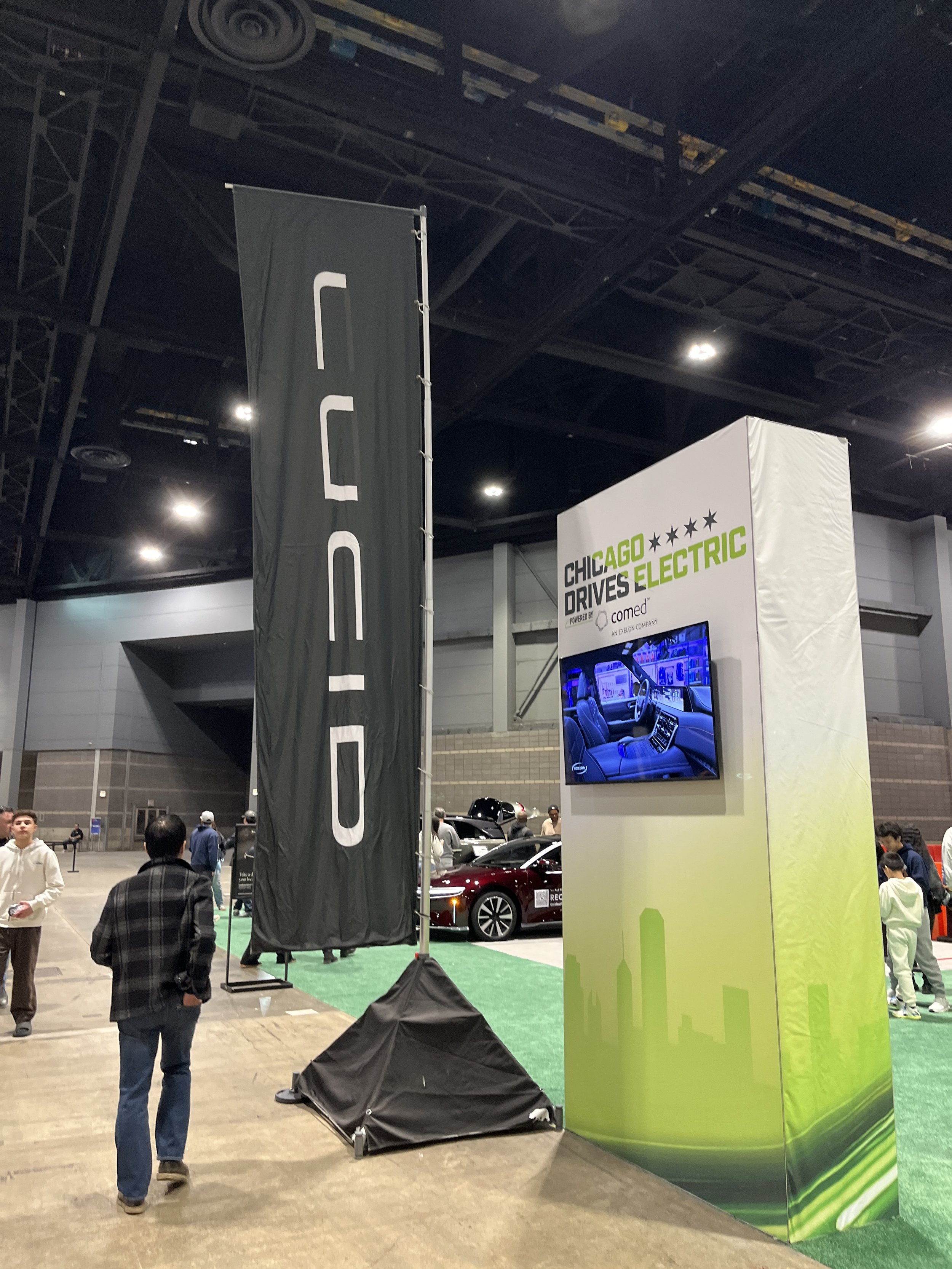
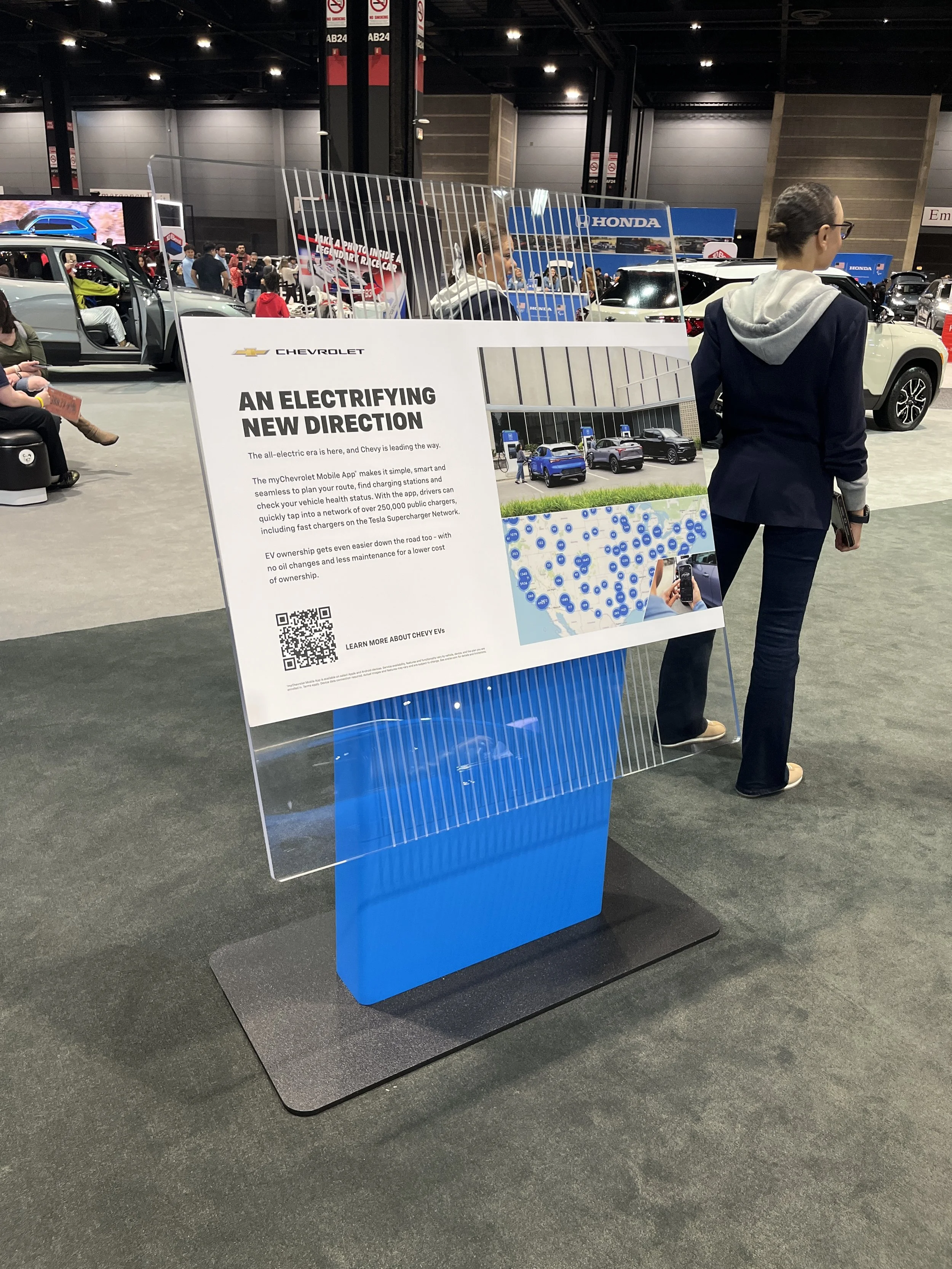
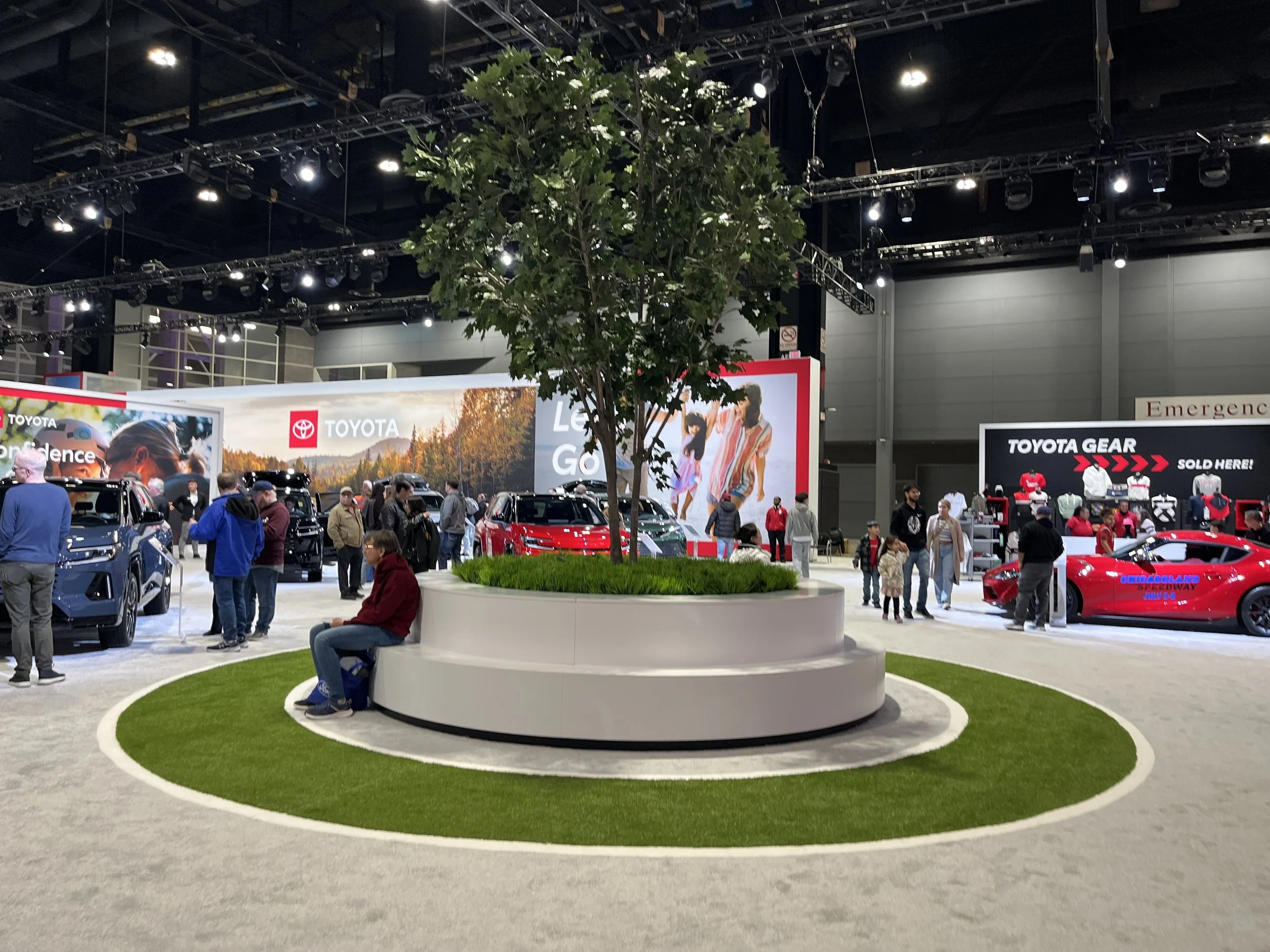
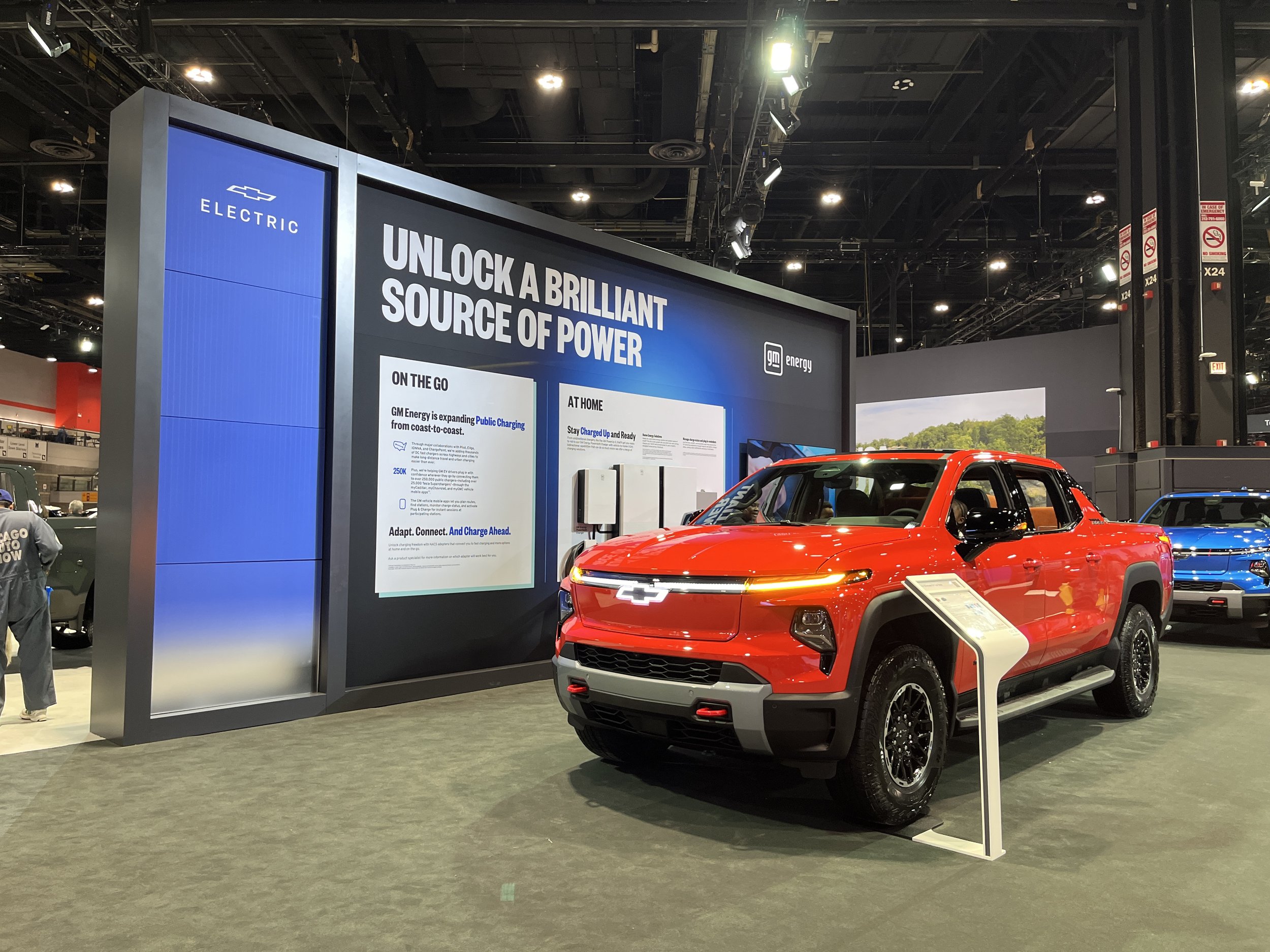
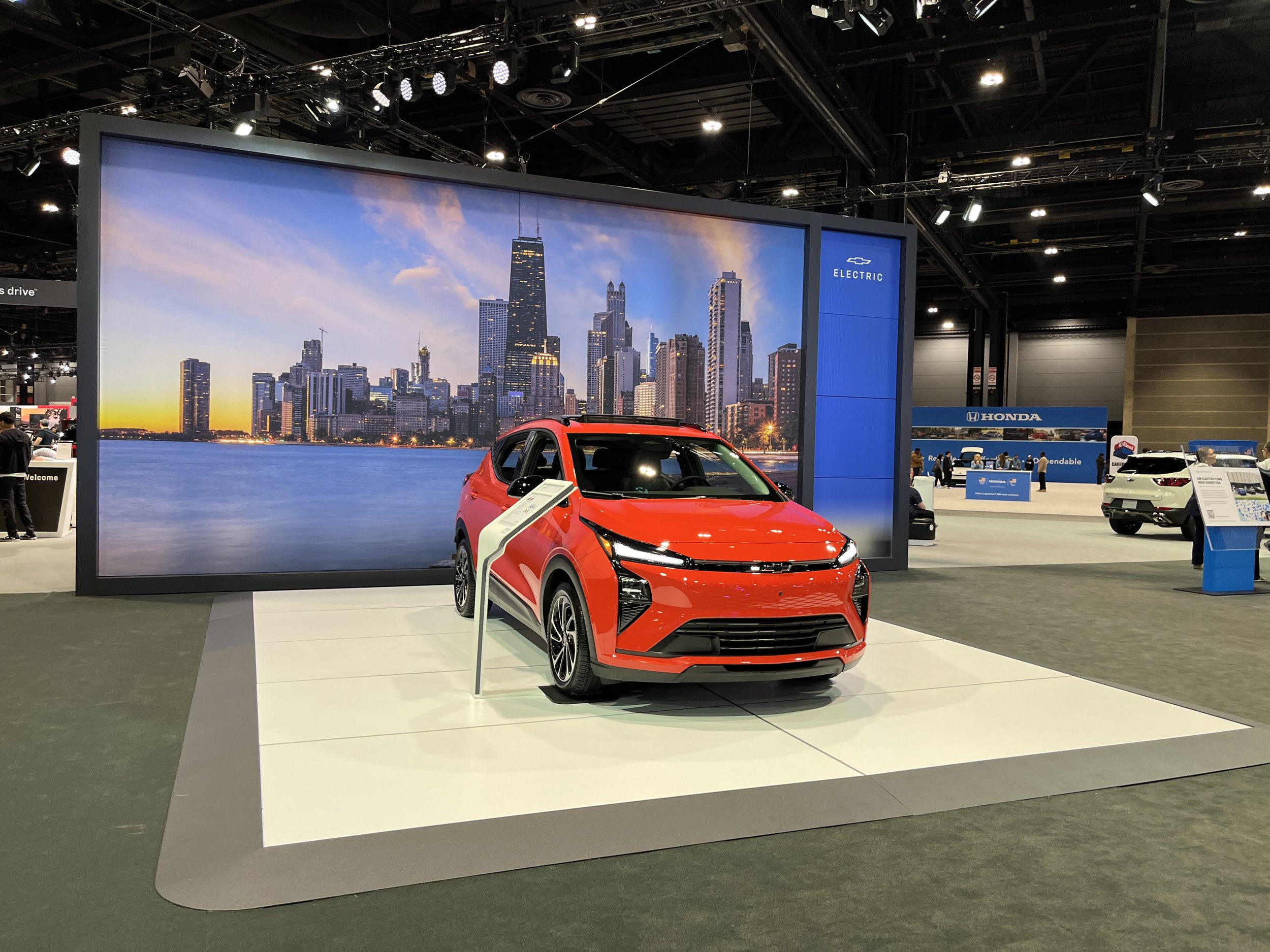
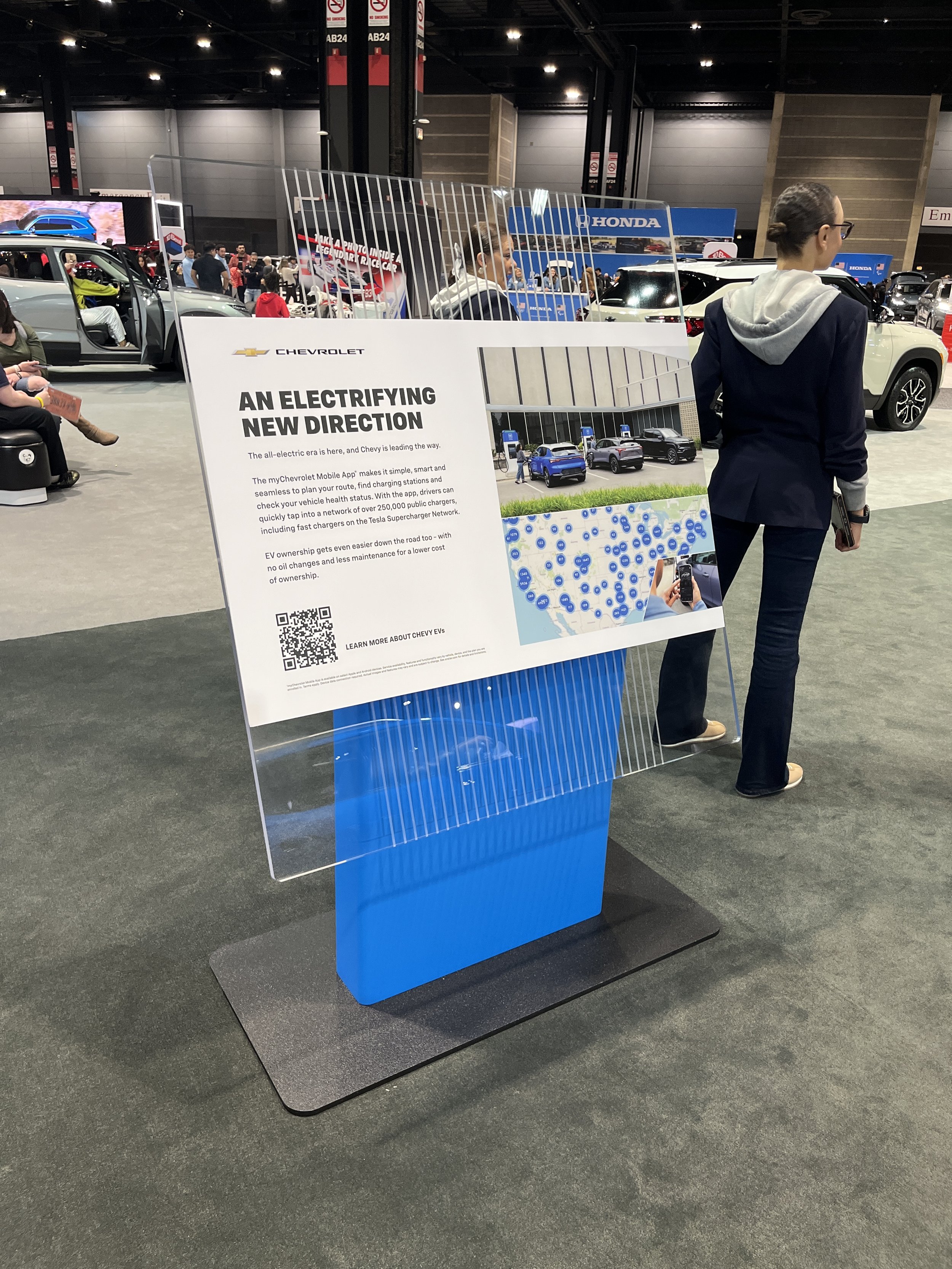
One of the most noticeable shifts across the show floor was the sheer presence of electric vehicles. Nearly every major automaker now showcased an EV. In many cases, electrification represented half of a brand’s story rather than a single spotlight moment. From a design perspective, EV storytelling leaned heavily into sustainability cues. Natural textures, garden-inspired installations, and messaging around carbon neutrality appeared across multiple brands.
Immersive Brand Presences
While the show floor brought many memorable environments, there were a few that stood out to us.
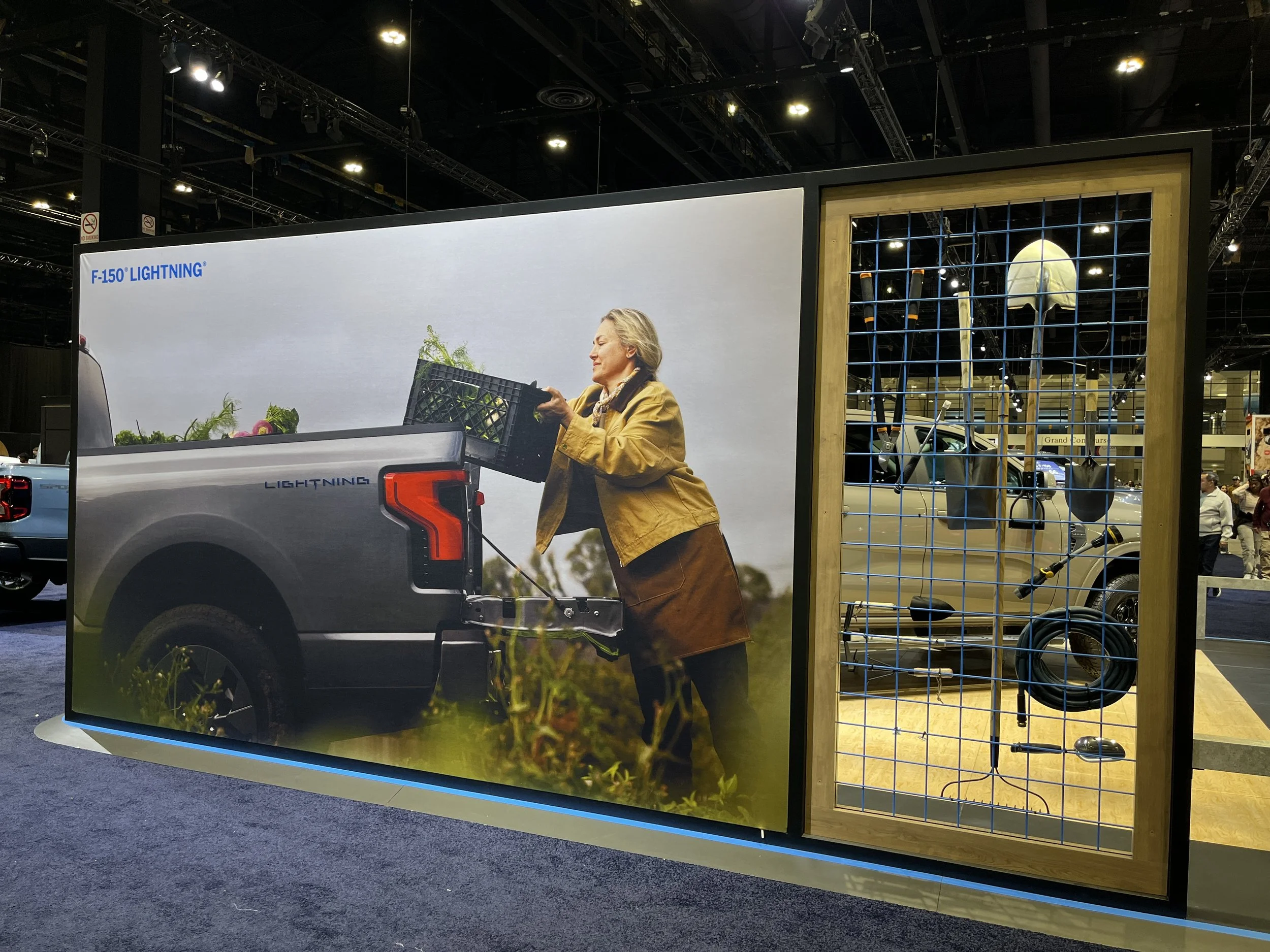
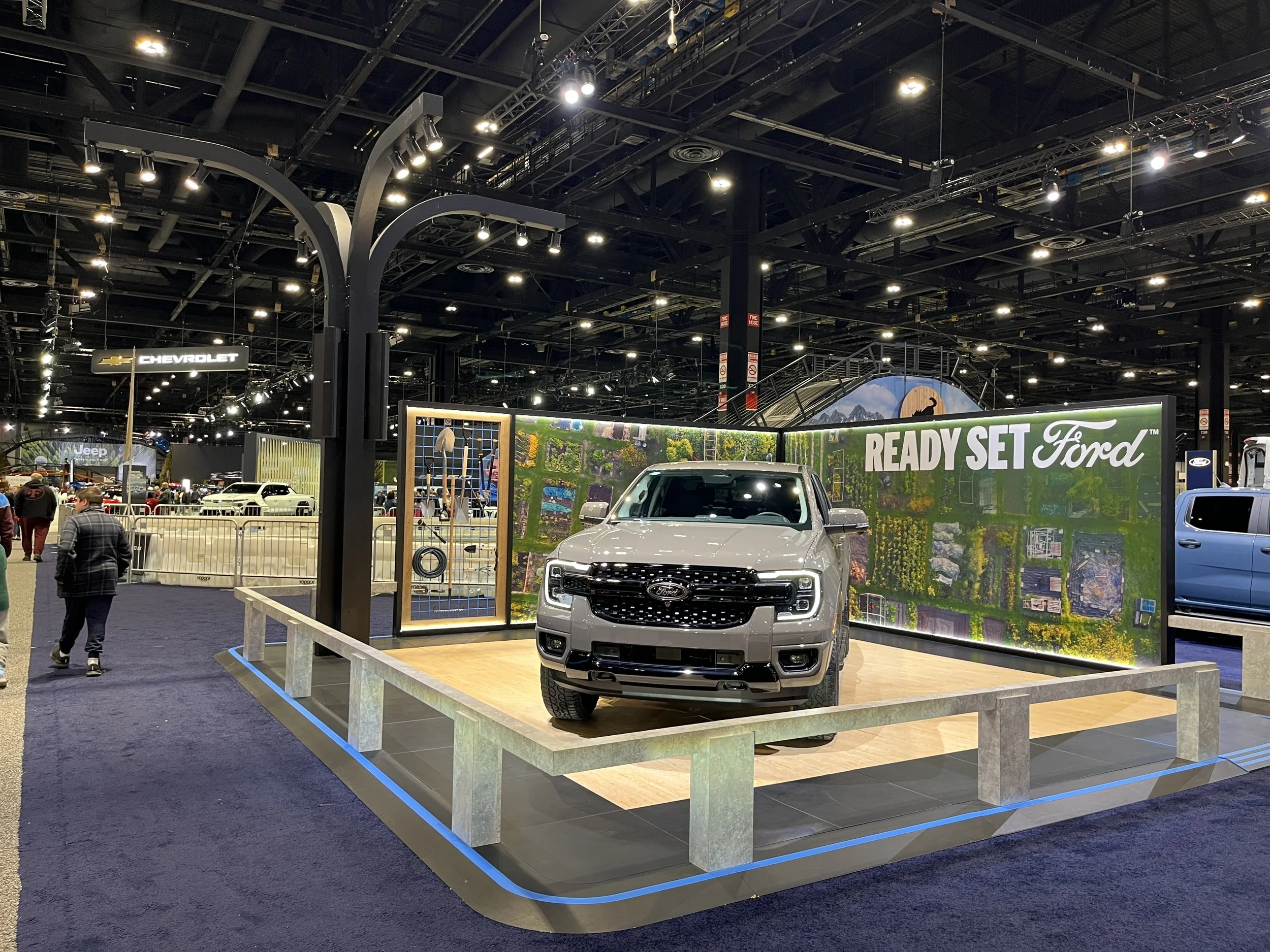
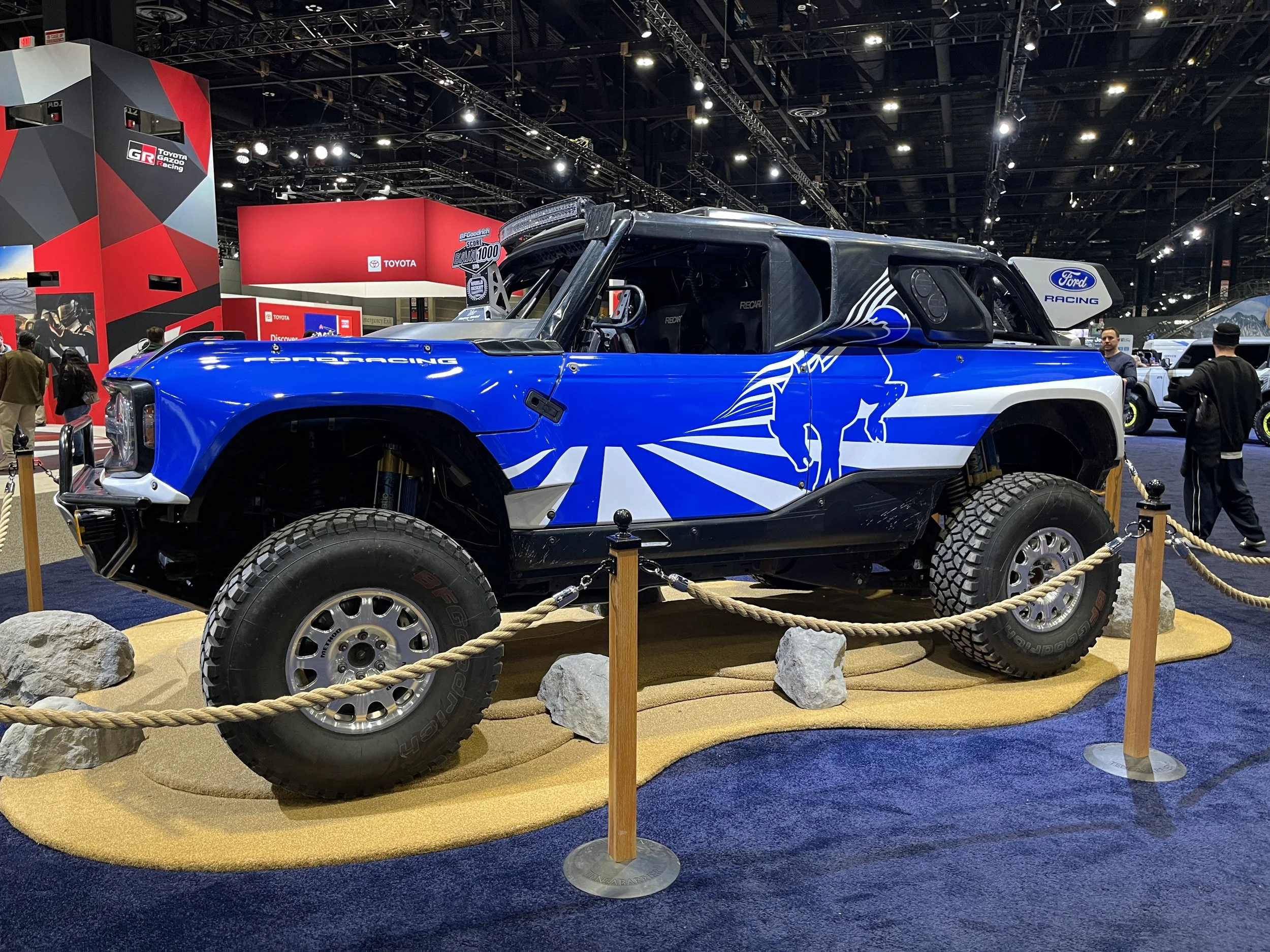
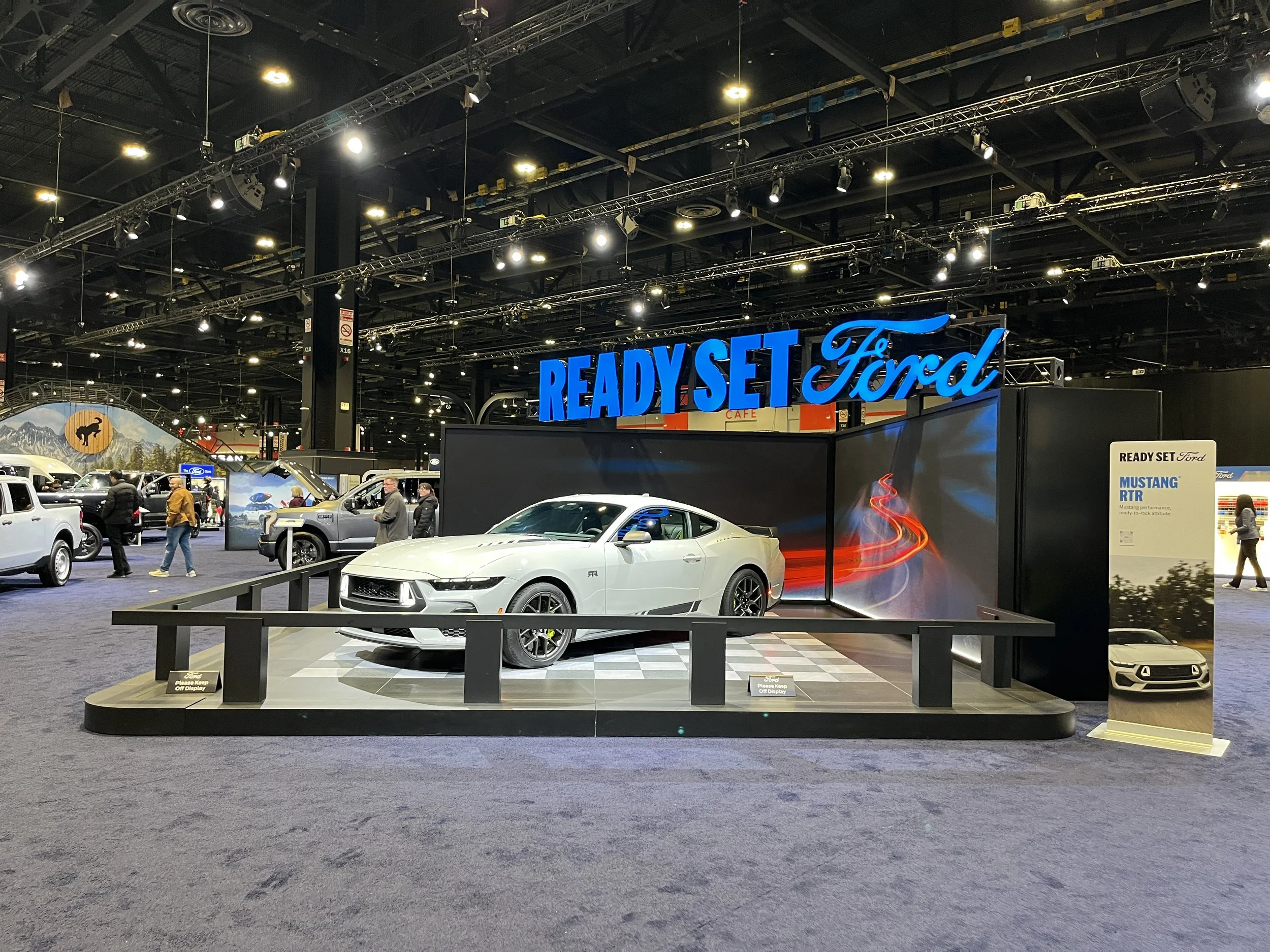
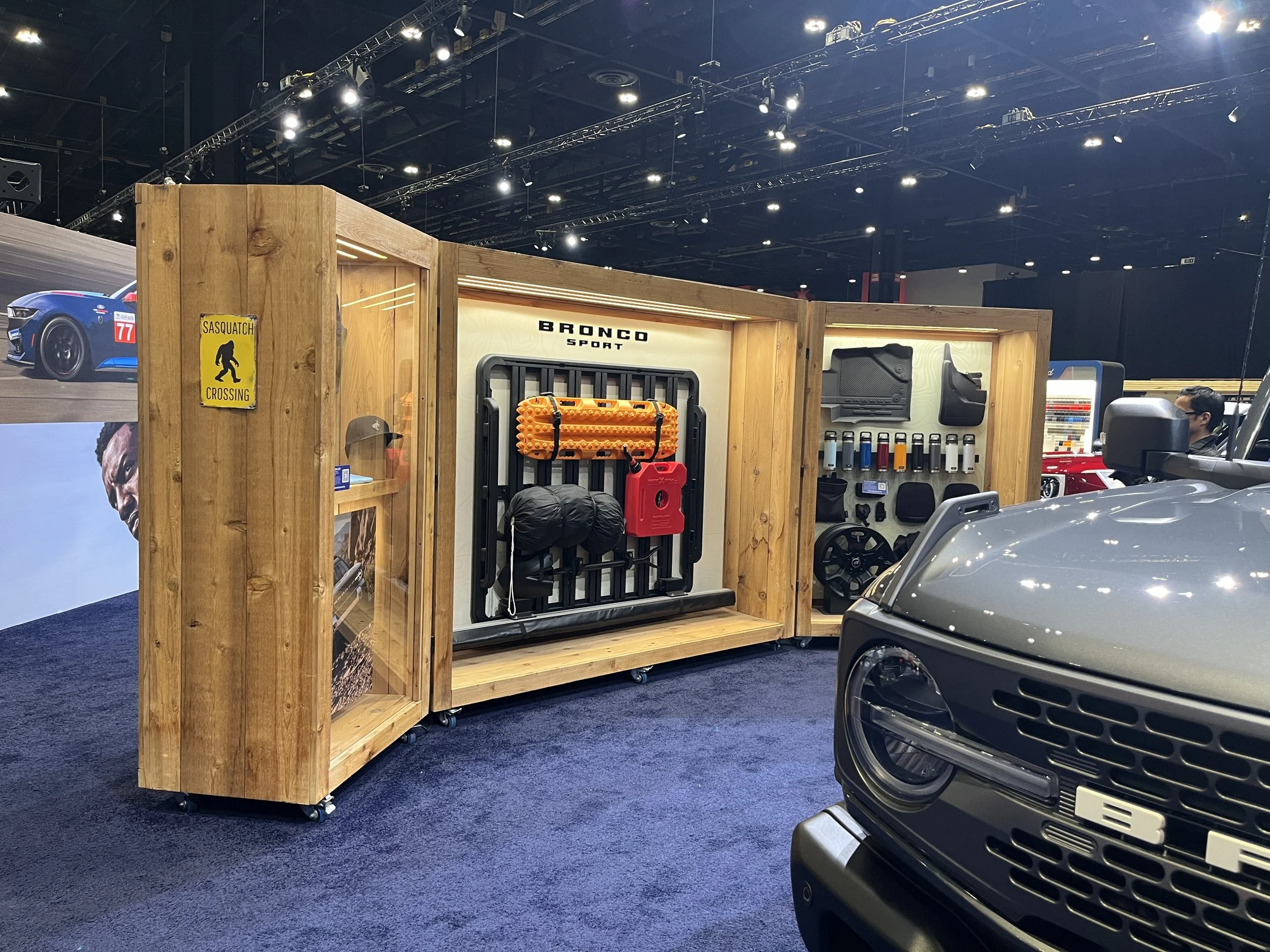
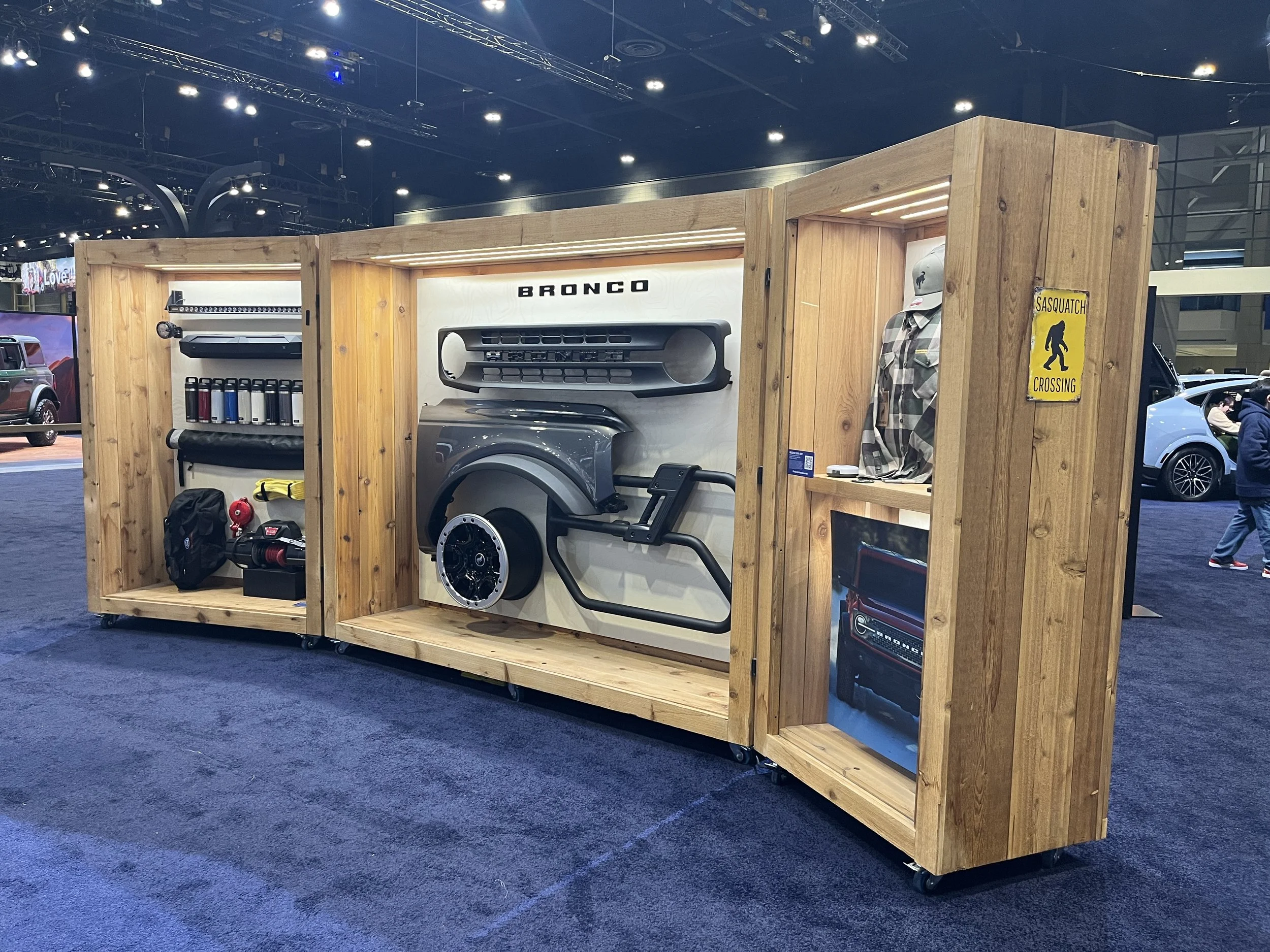
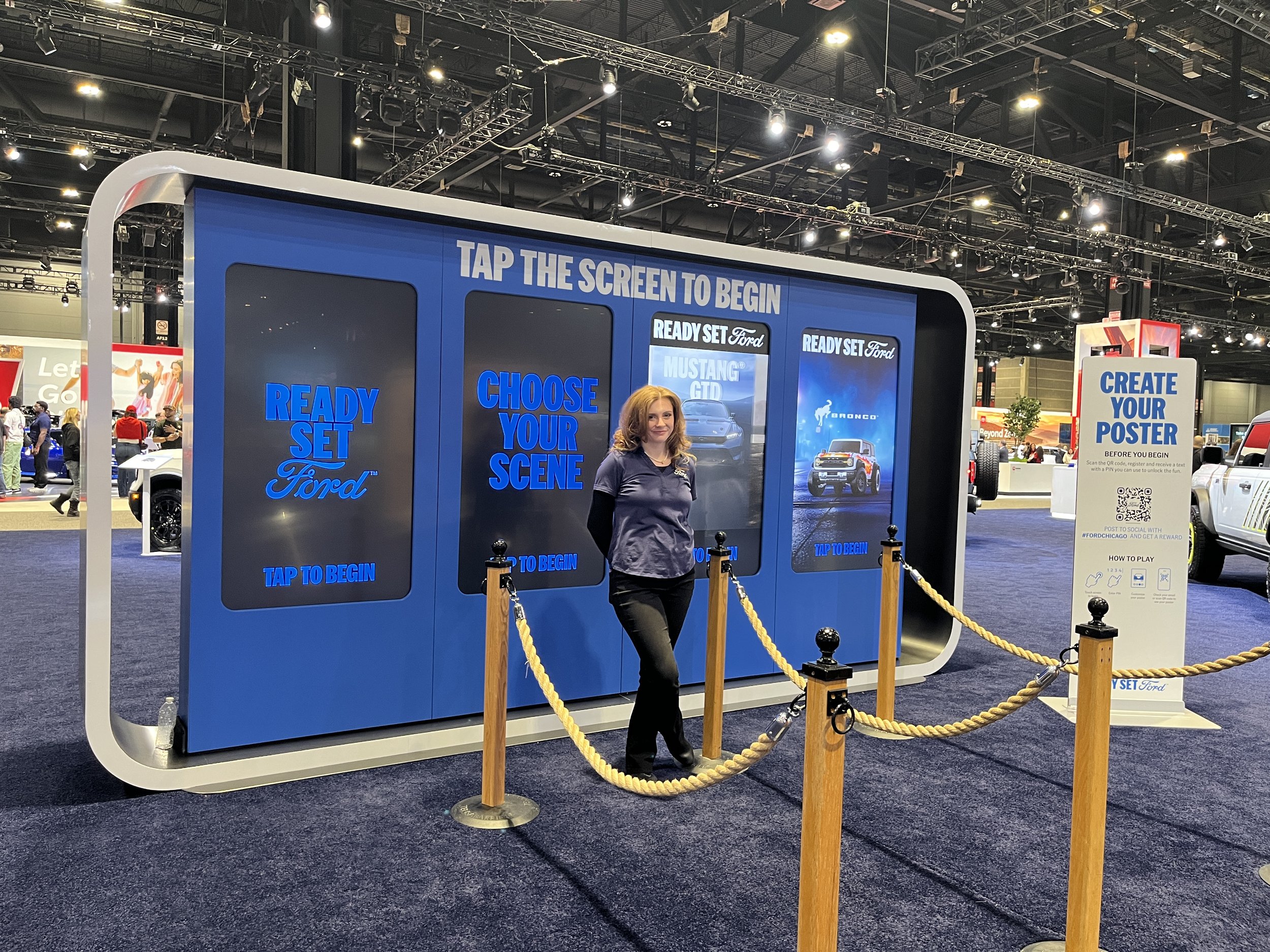
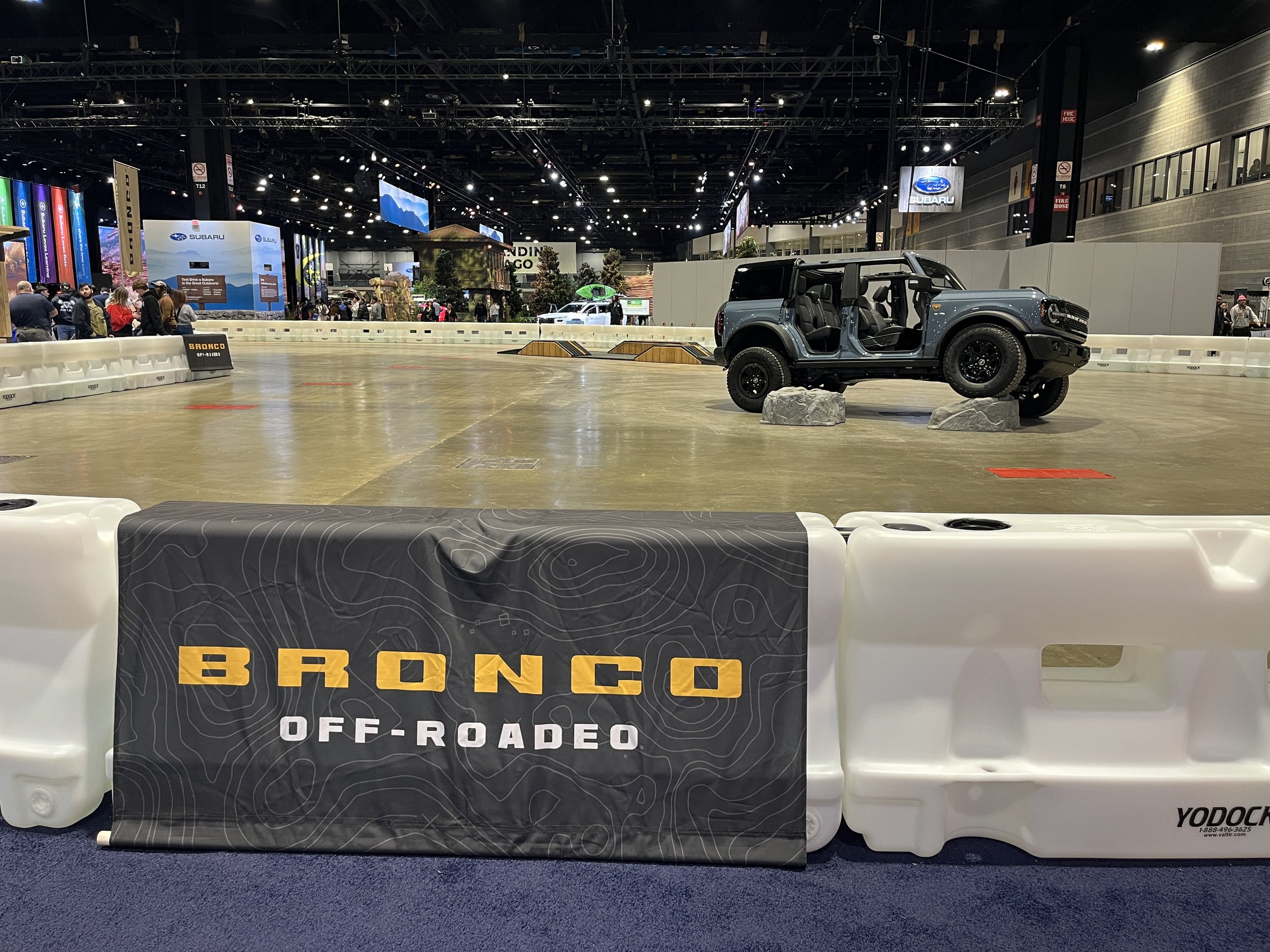
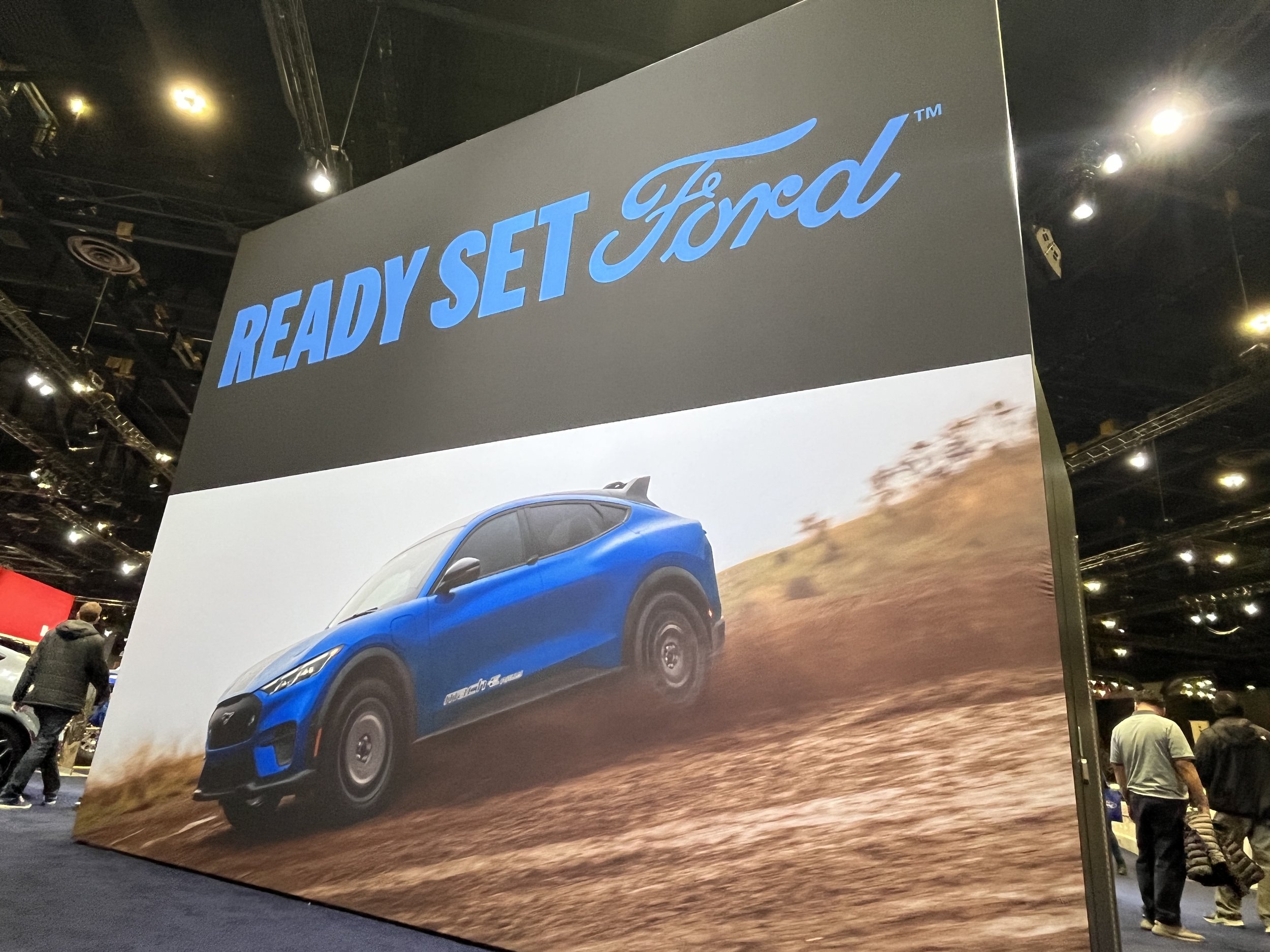
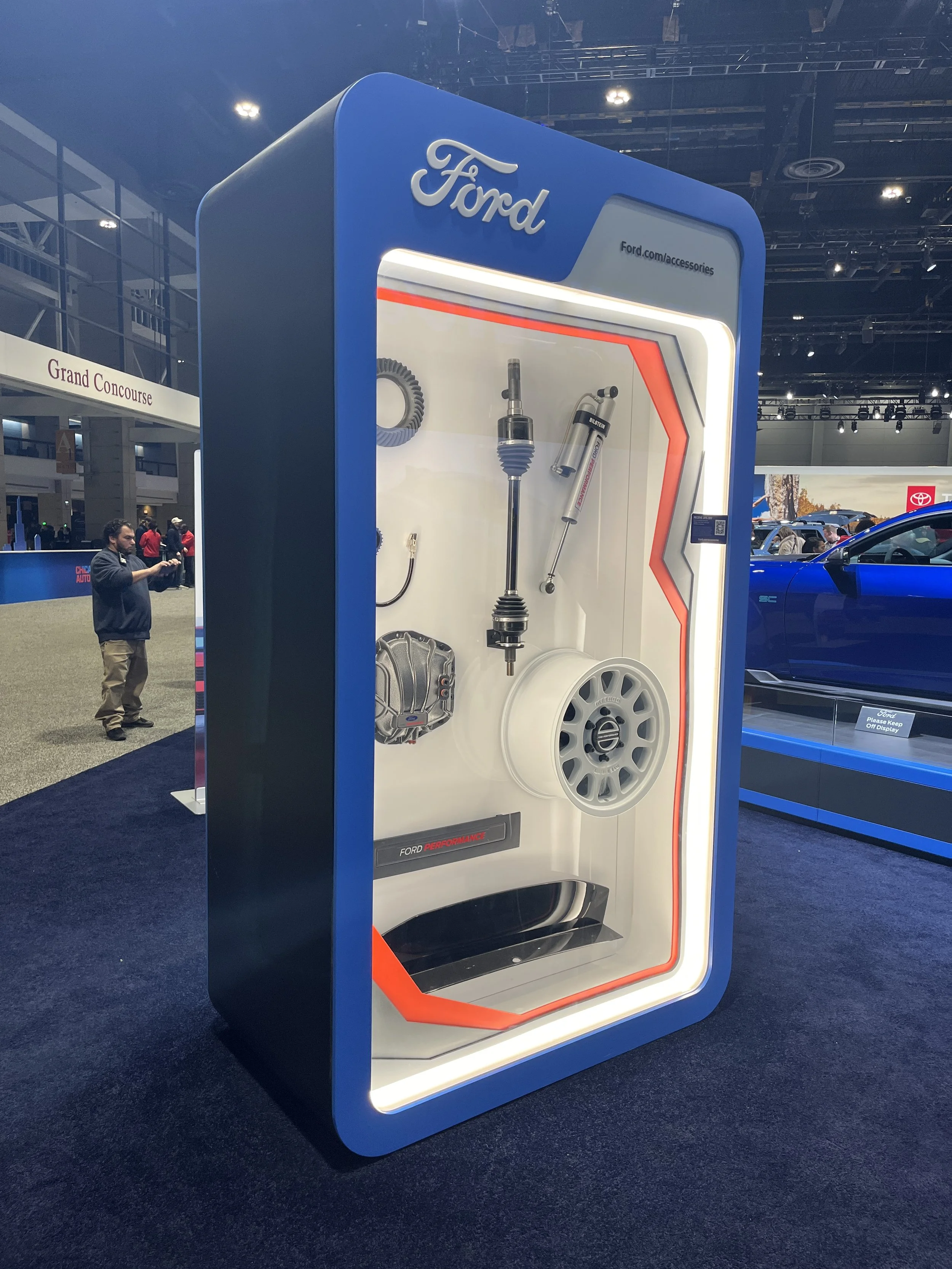
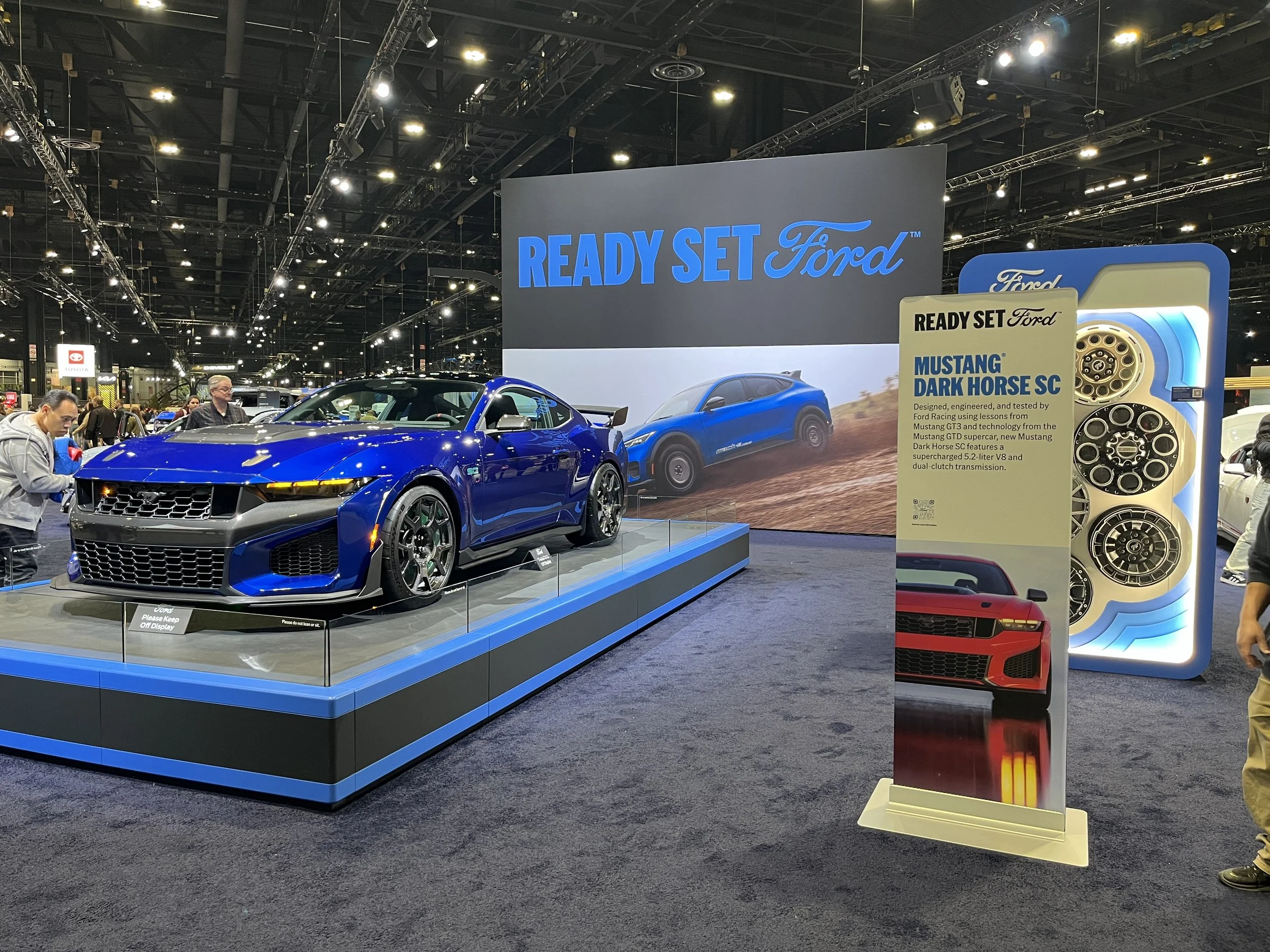
Ford kicked things off with strong visual storytelling centered on Mustang and Bronco, framed by cool blue displays and the “Ready. Set. Ford.” theme. Off-road test areas for Bronco added a physical, experiential dimension, allowing visitors to engage with the brand beyond static displays. Ford’s F-150 Lightning EV stood out with a garden-like environment and earth-forward graphics, blending performance with environmental awareness in a way that felt approachable rather than technical.
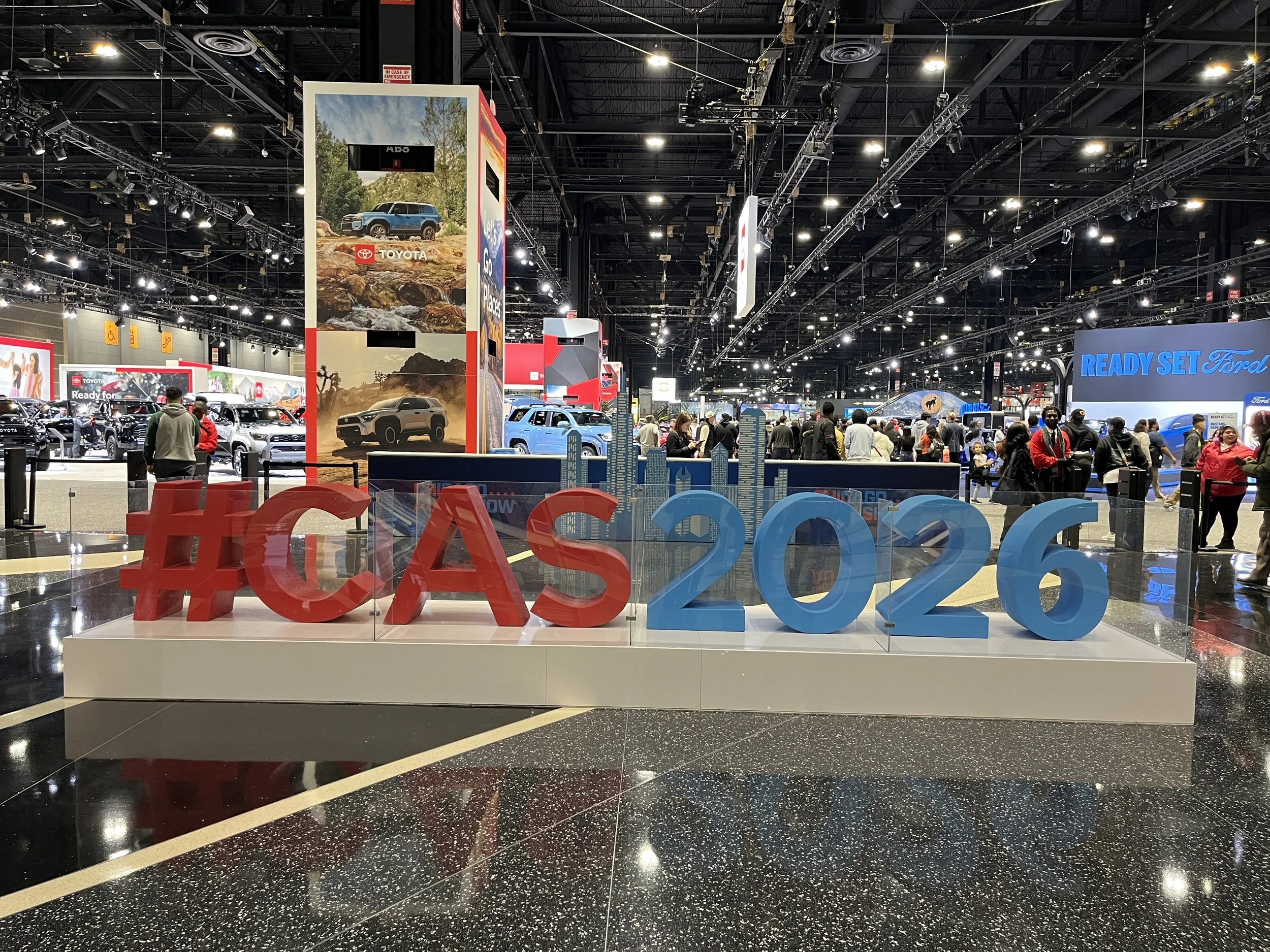
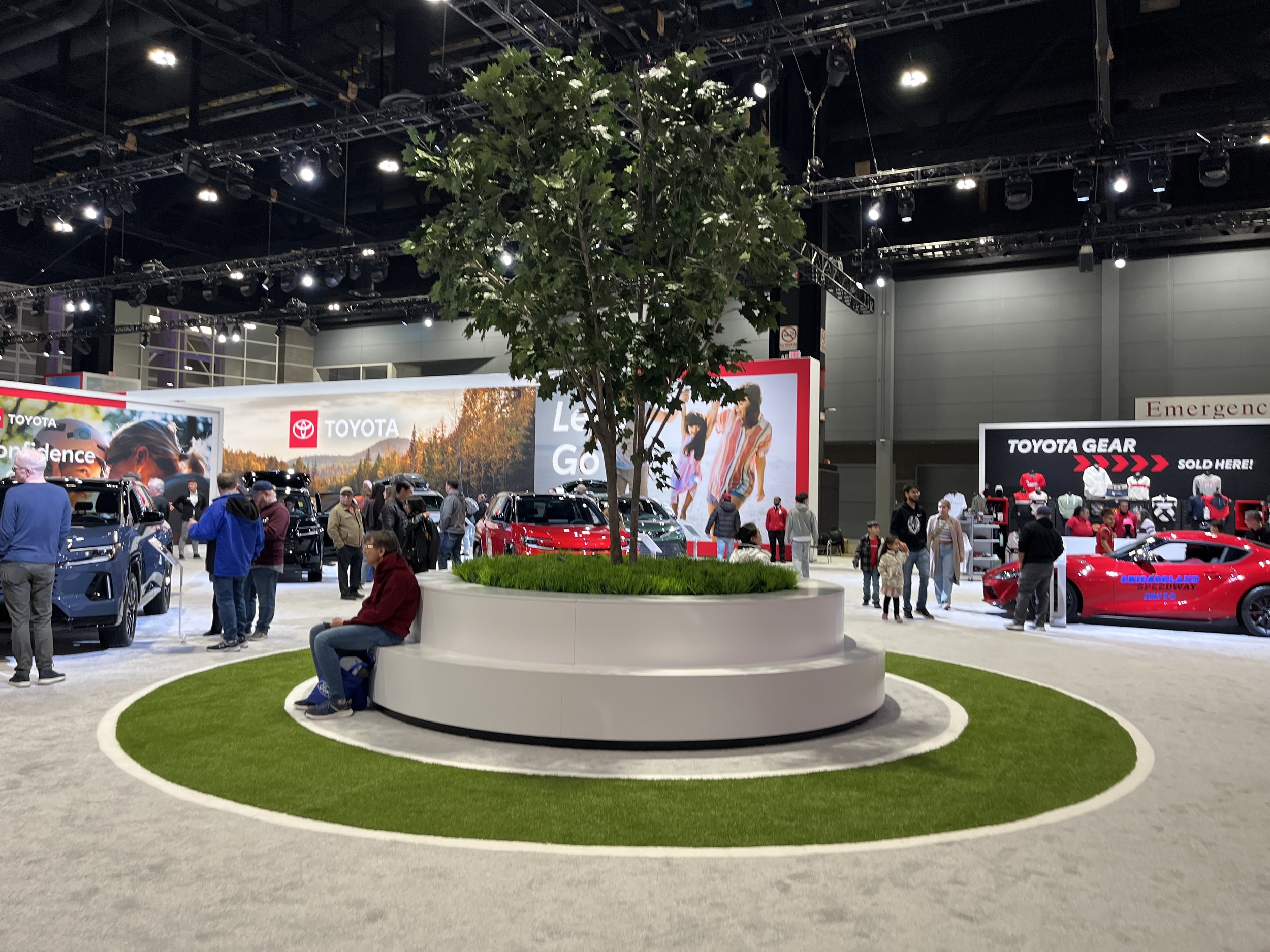
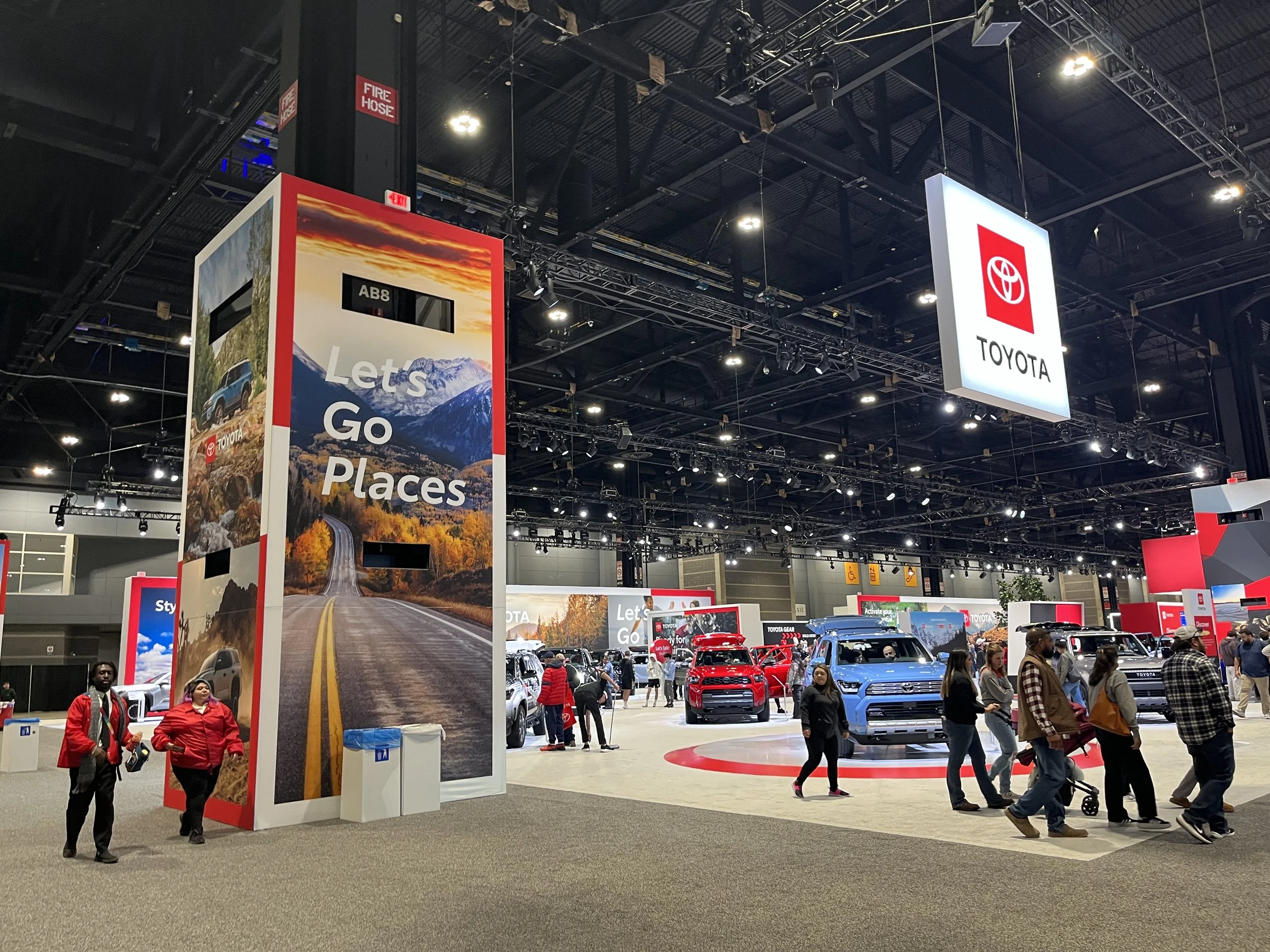
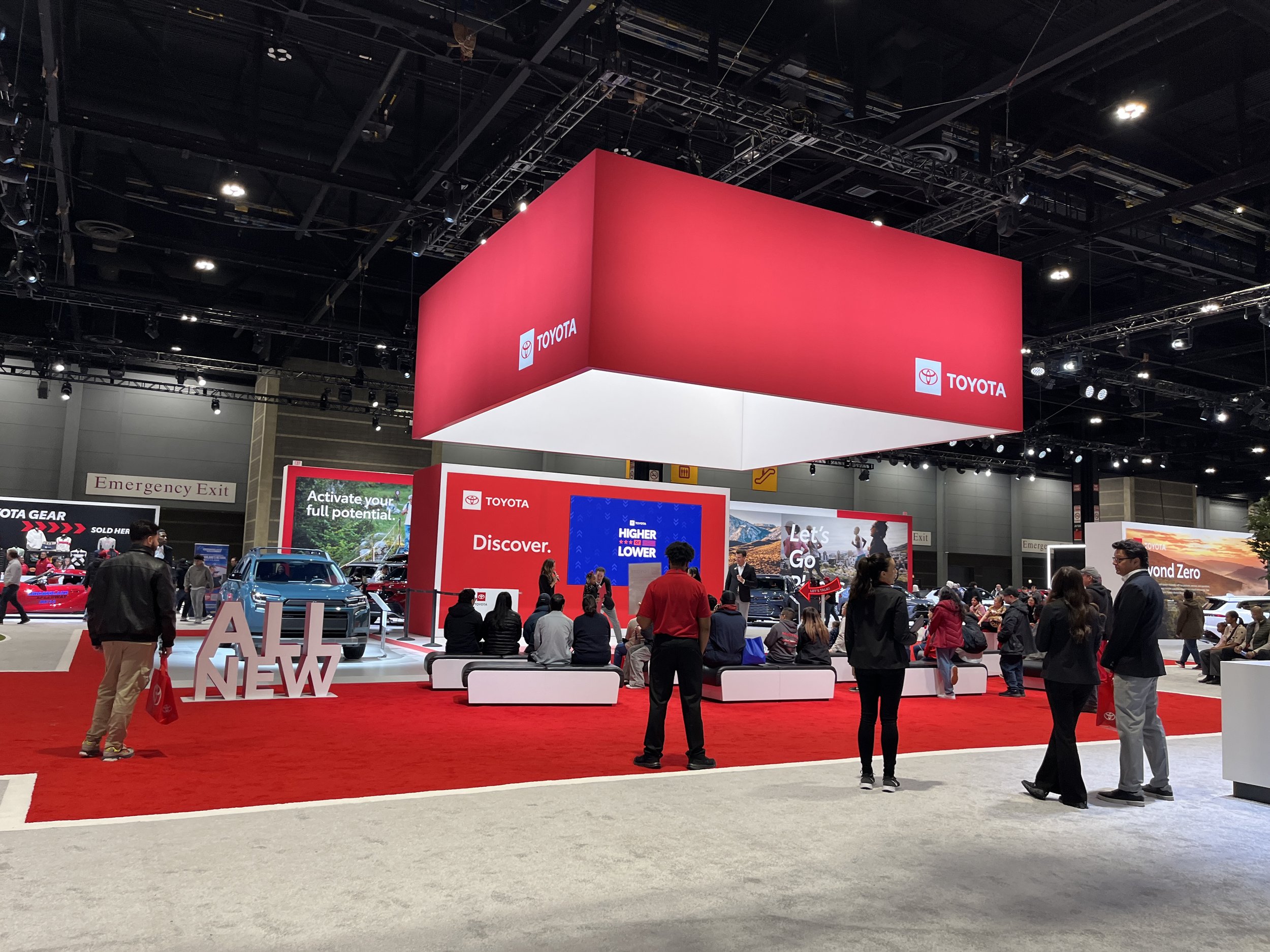
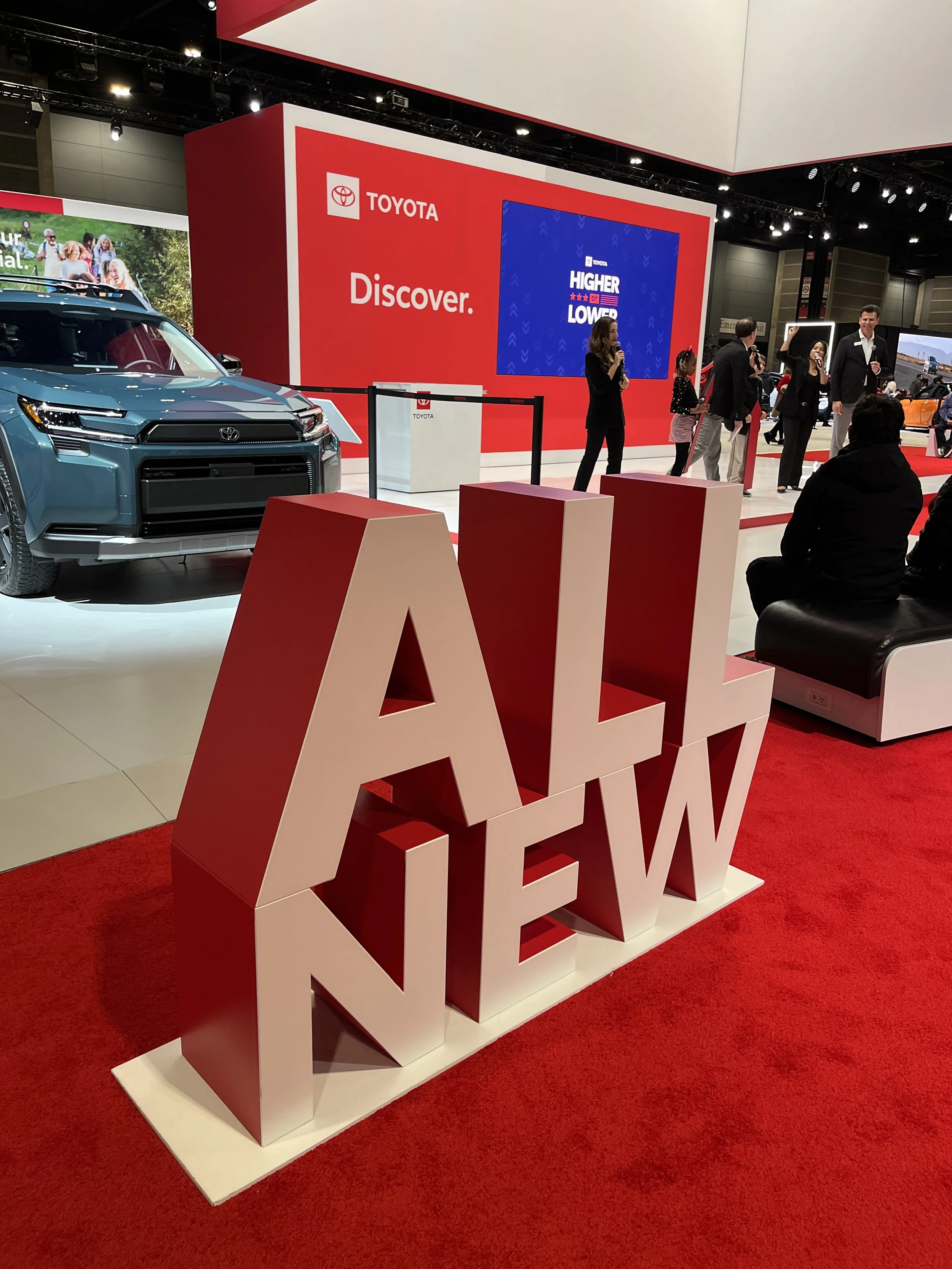
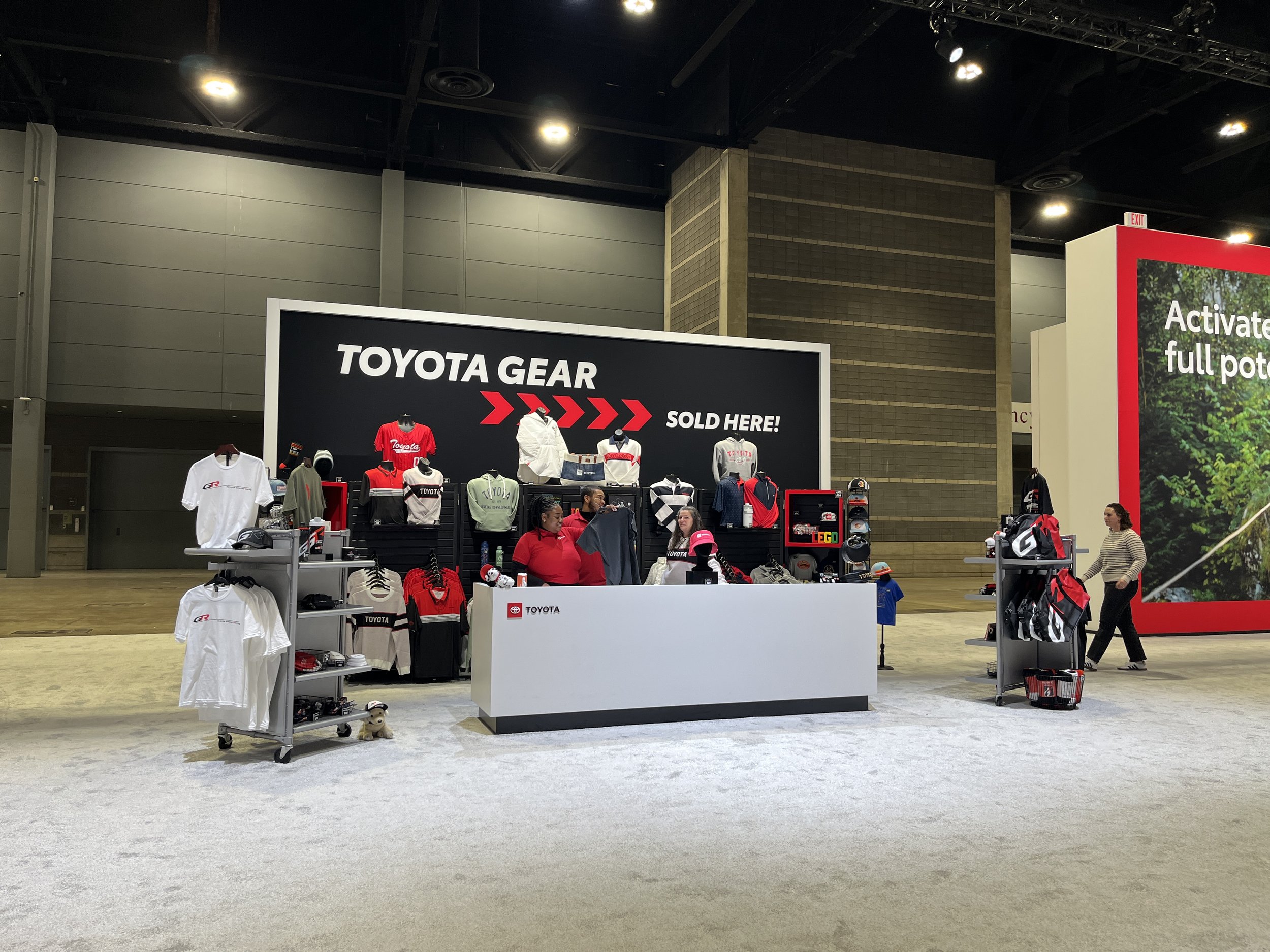
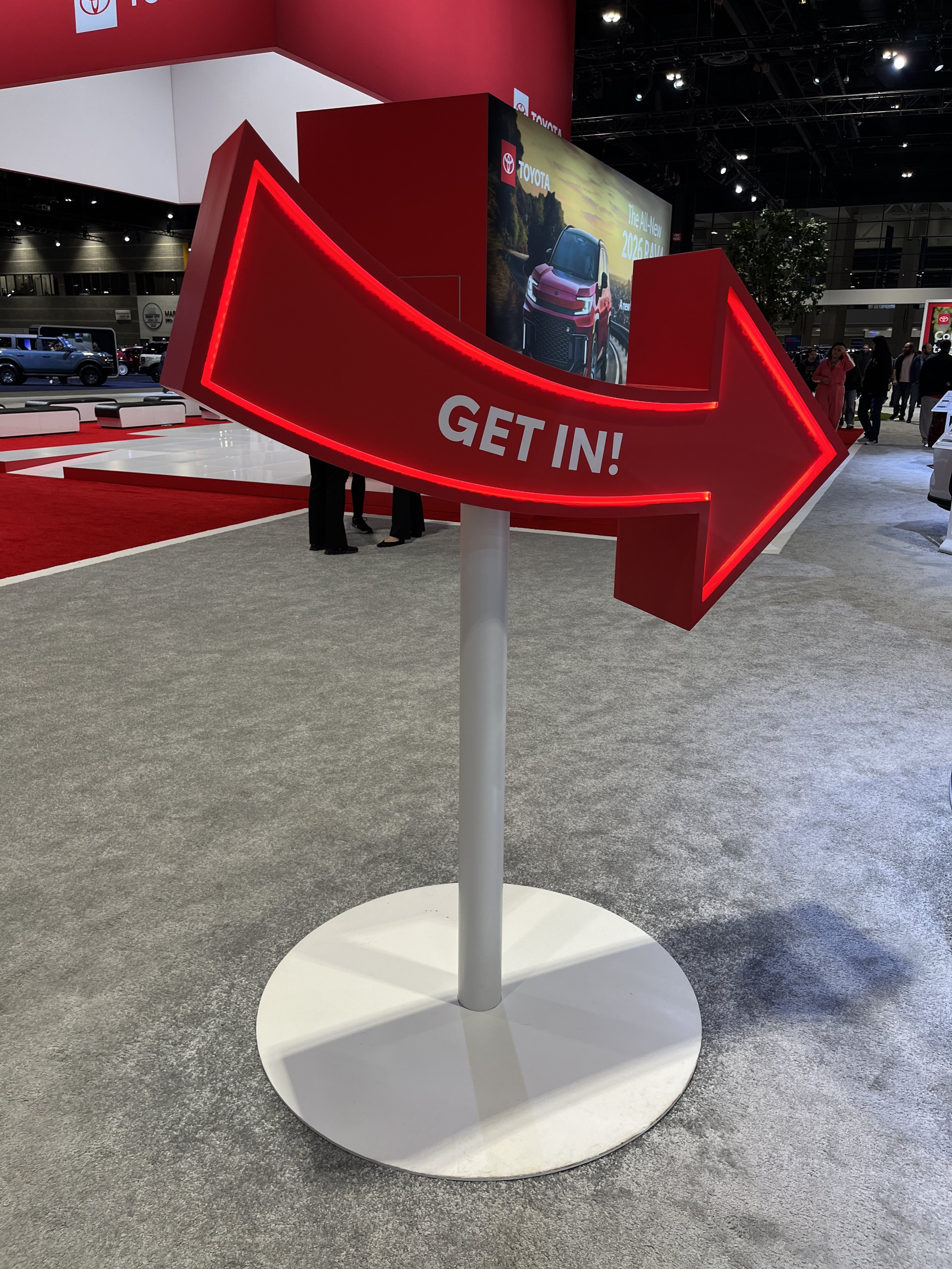
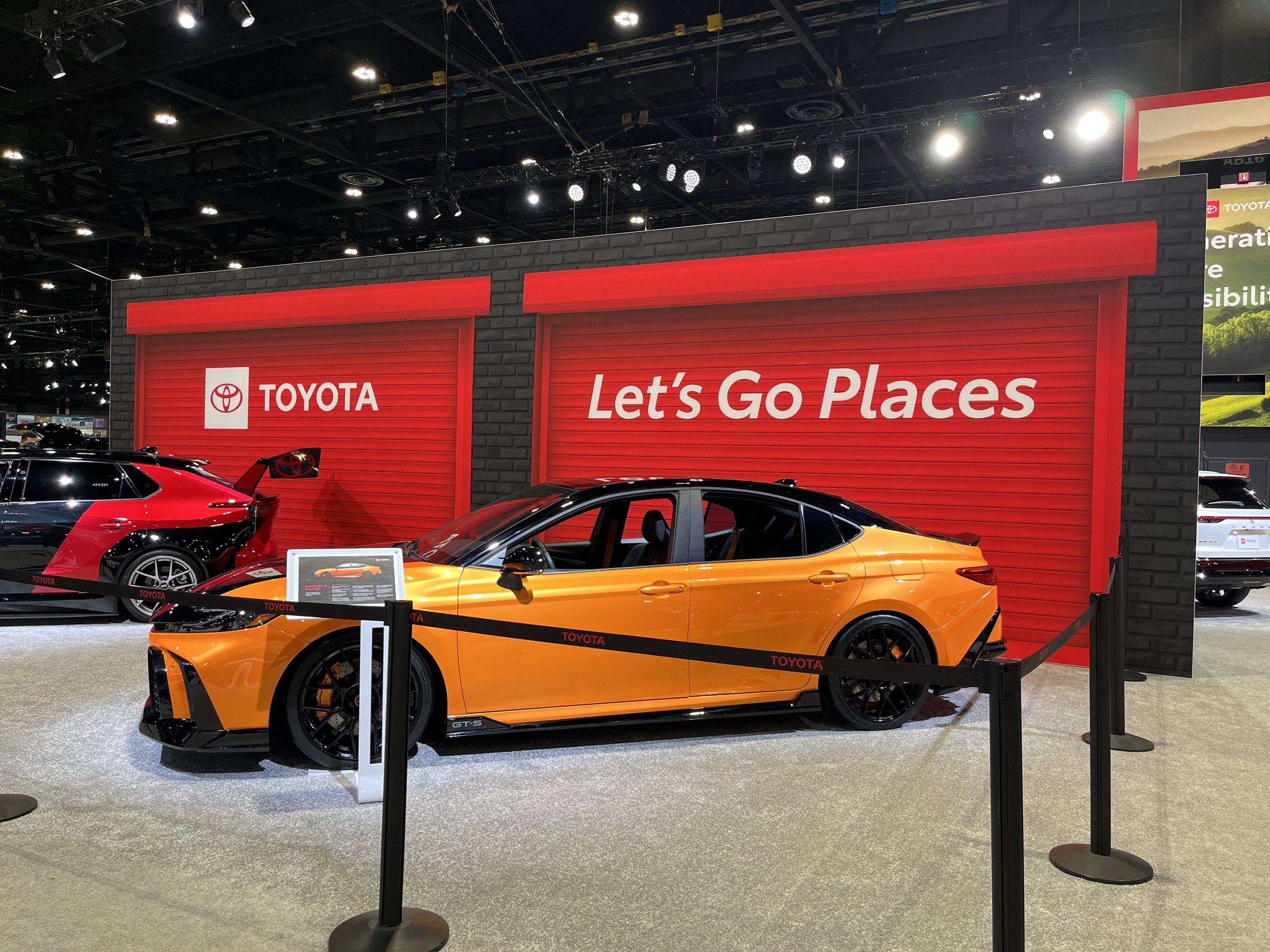
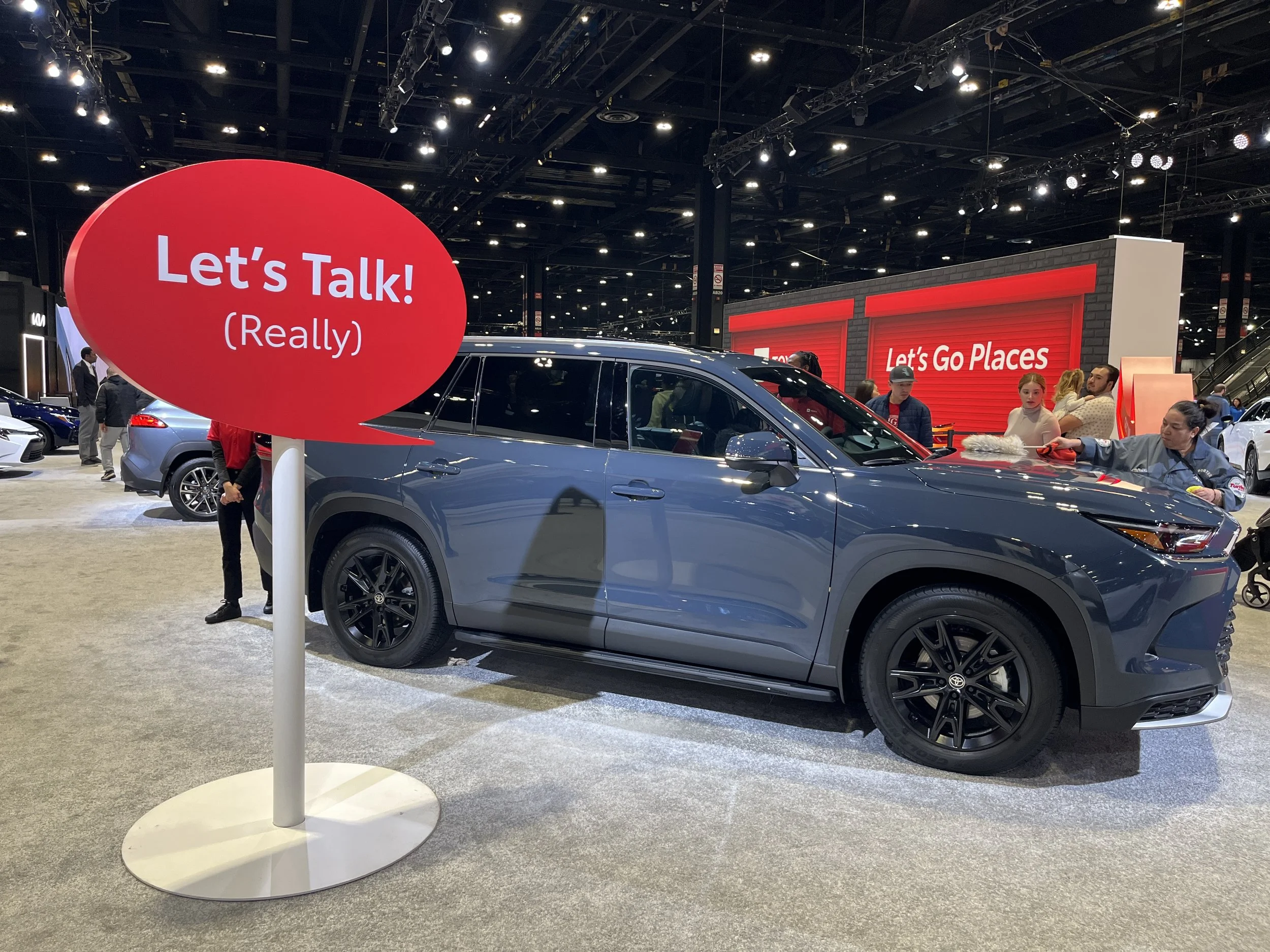
Positioned near the entrance, Toyota commanded attention with a large, vibrant footprint built around its signature red graphics and the tagline “Let’s Go Places.” A central stage encouraged interaction, shifting the experience from passive viewing to active engagement. Clean spatial zoning and bold brand language created an environment that felt energetic and welcoming.
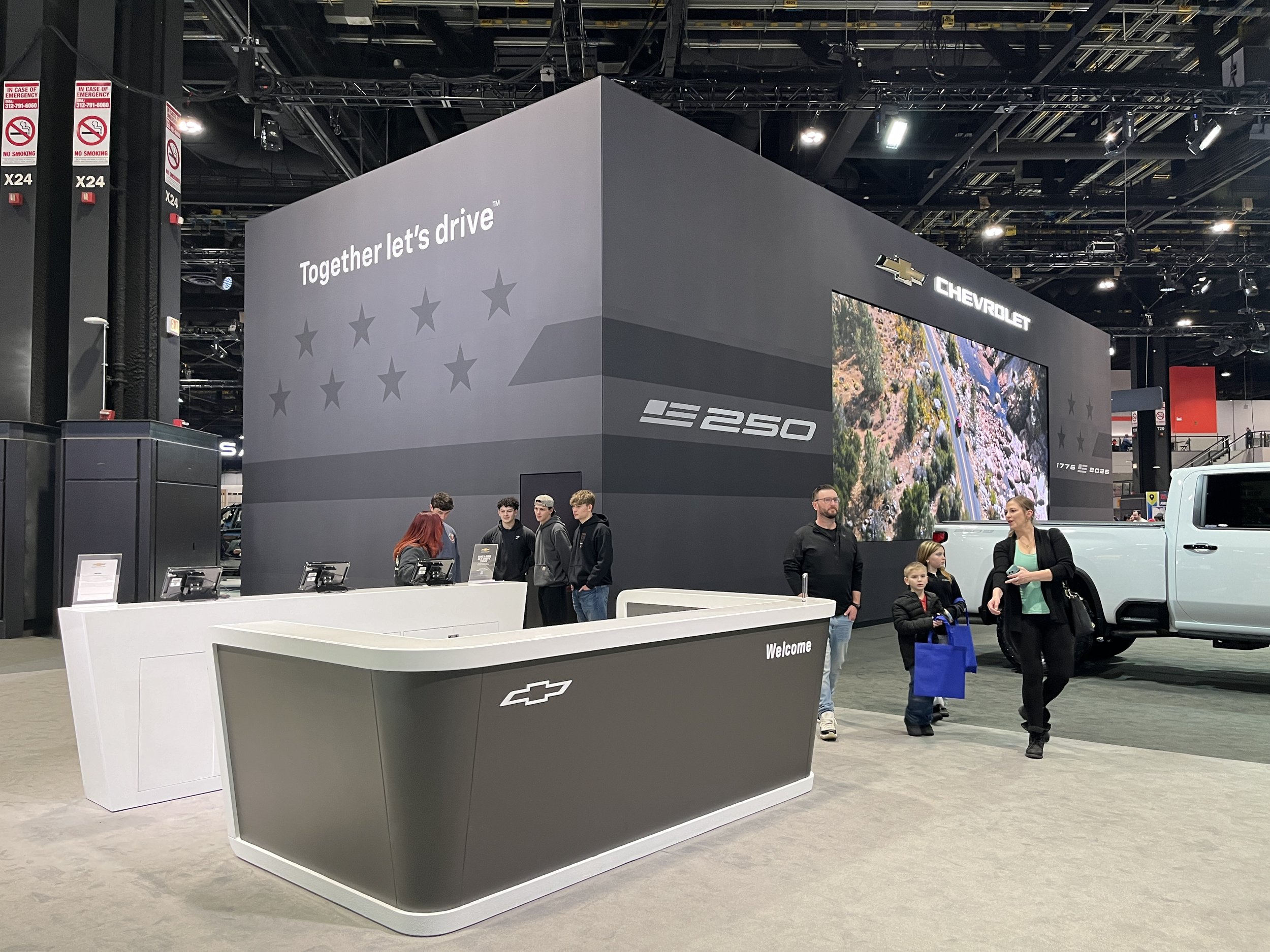
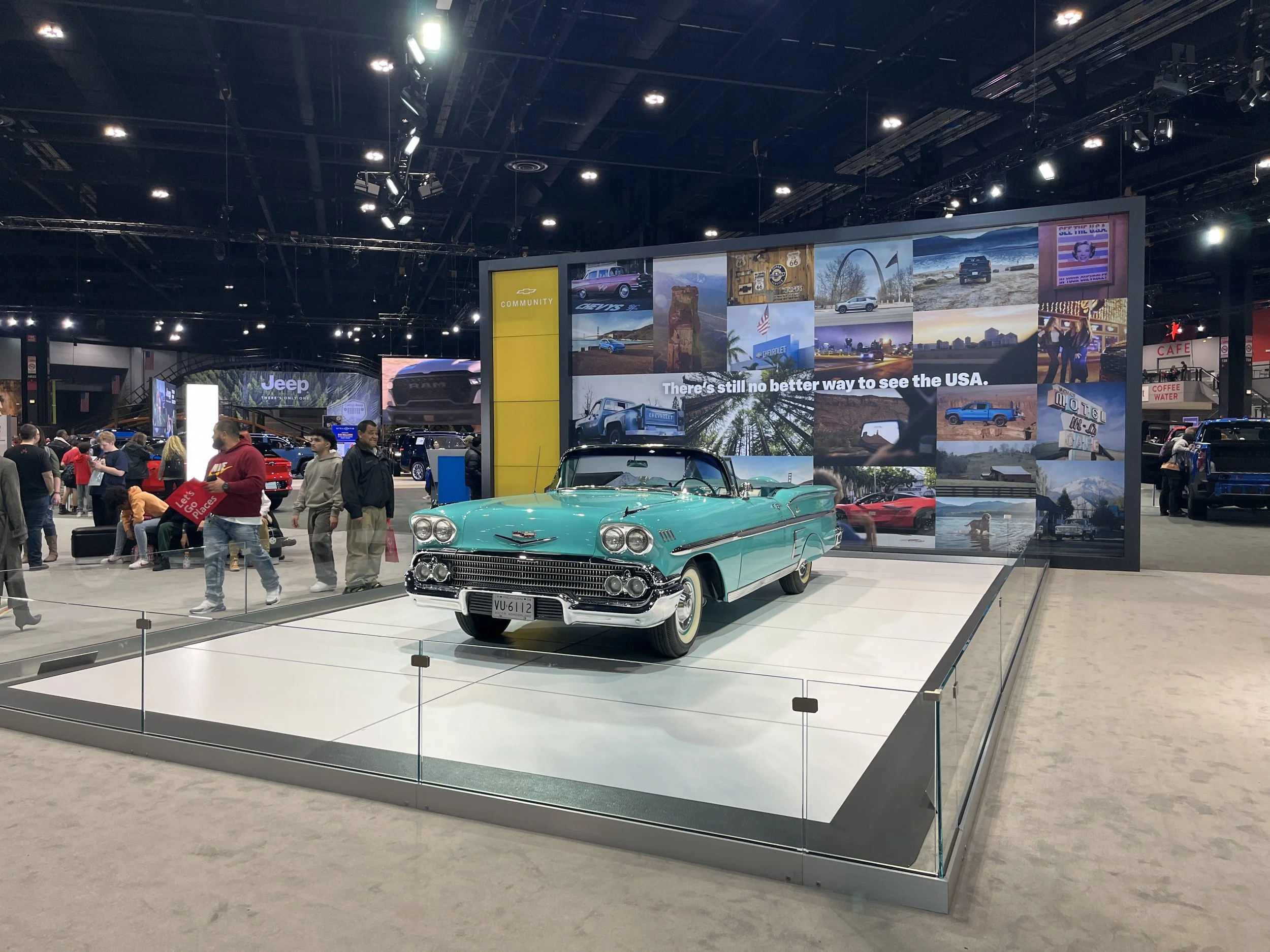
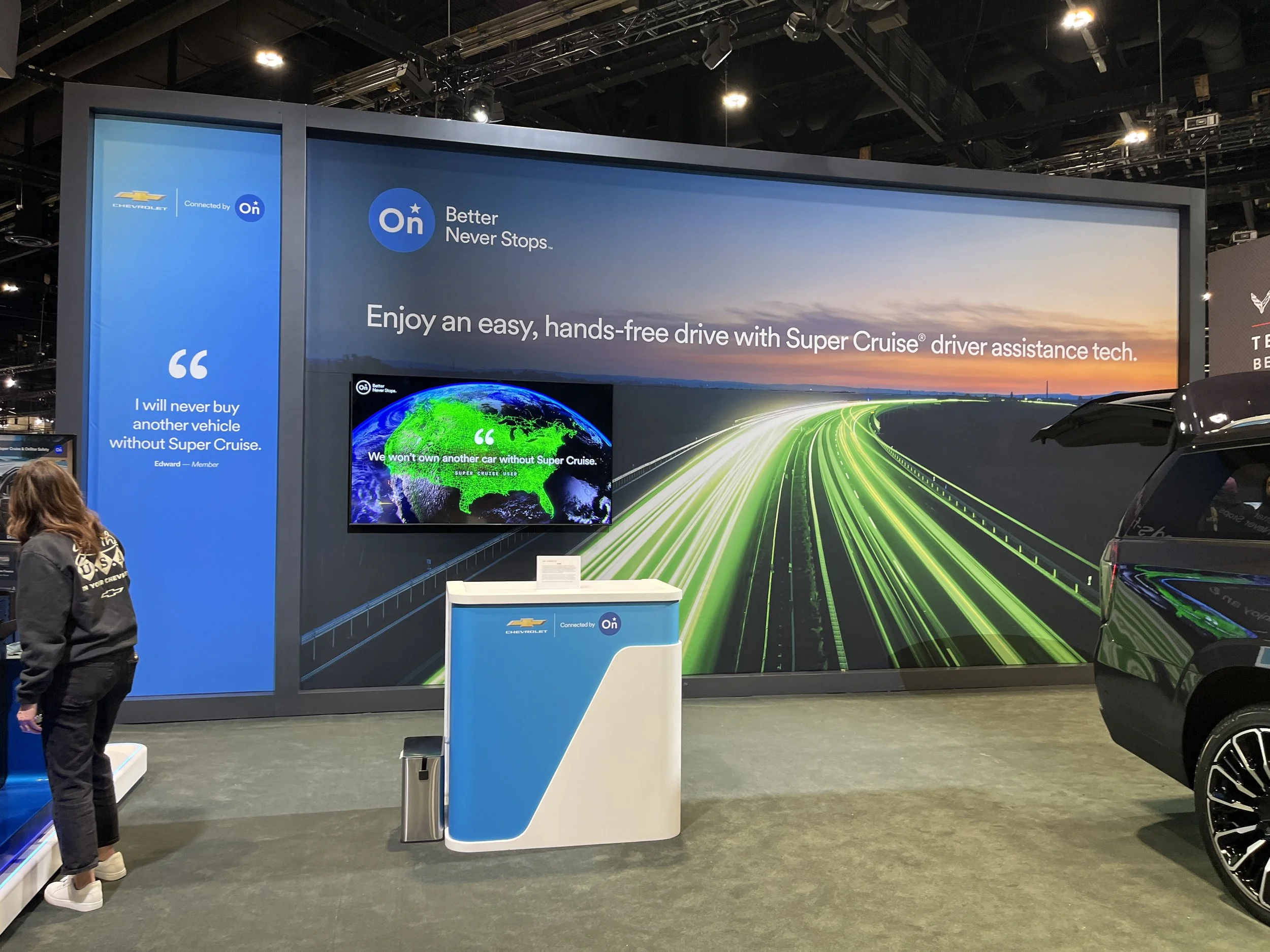
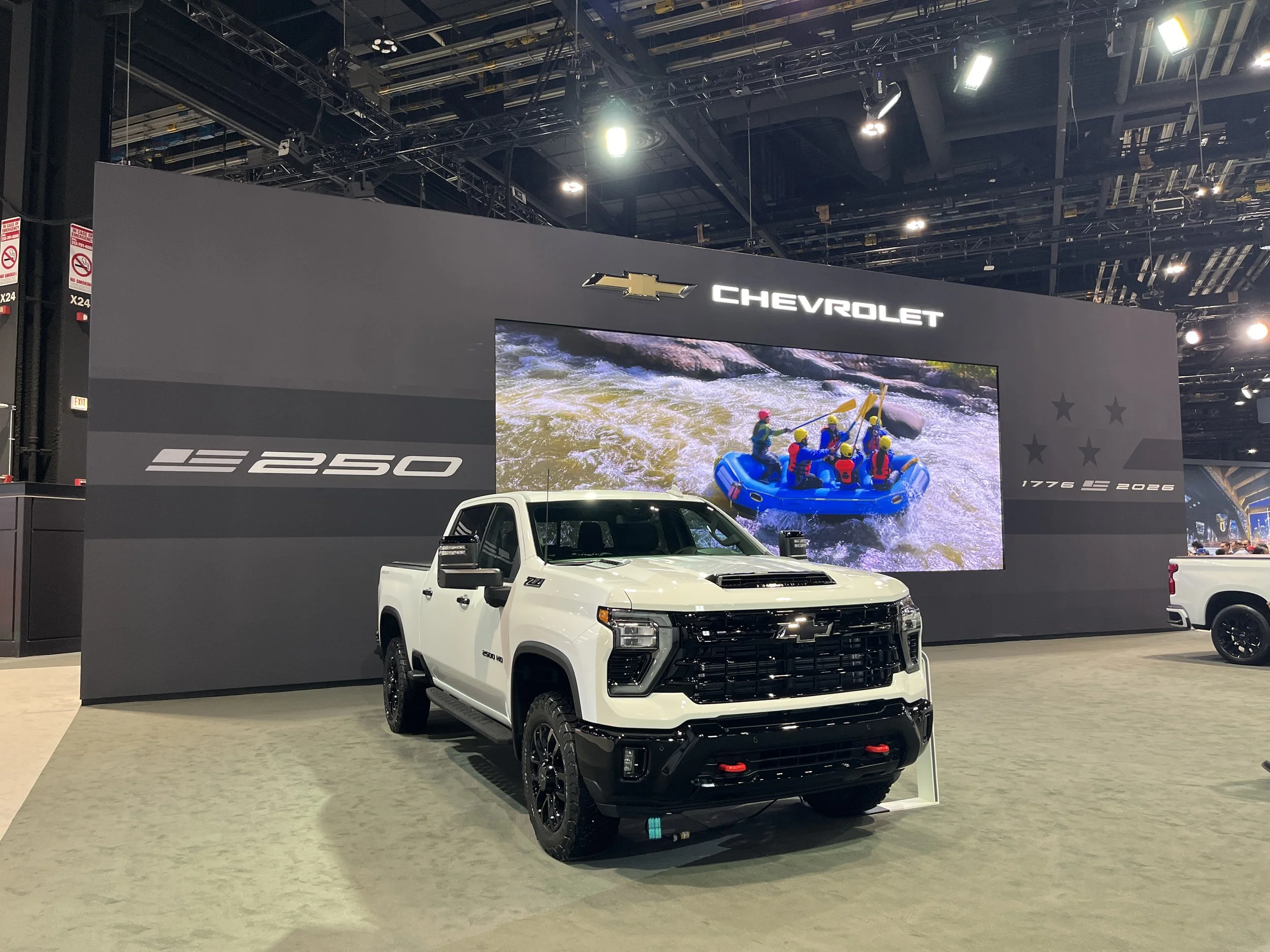
Chevrolet embraced heritage and storytelling with a booth centered around the theme “Together Let’s Drive.” Adventure-focused road-trip visuals, graphic collages, and a restored 1950 Chevy created a nostalgic atmosphere celebrating community and performance.
A major focal point was the “1776–2026” initiative, highlighting Chevrolet’s Stars & Steel Collection: a patriotic campaign marking America’s 250th anniversary. The messaging emphasized American craftsmanship and purpose-driven pride, tying iconic vehicles like Corvette and Silverado into a broader cultural narrative.
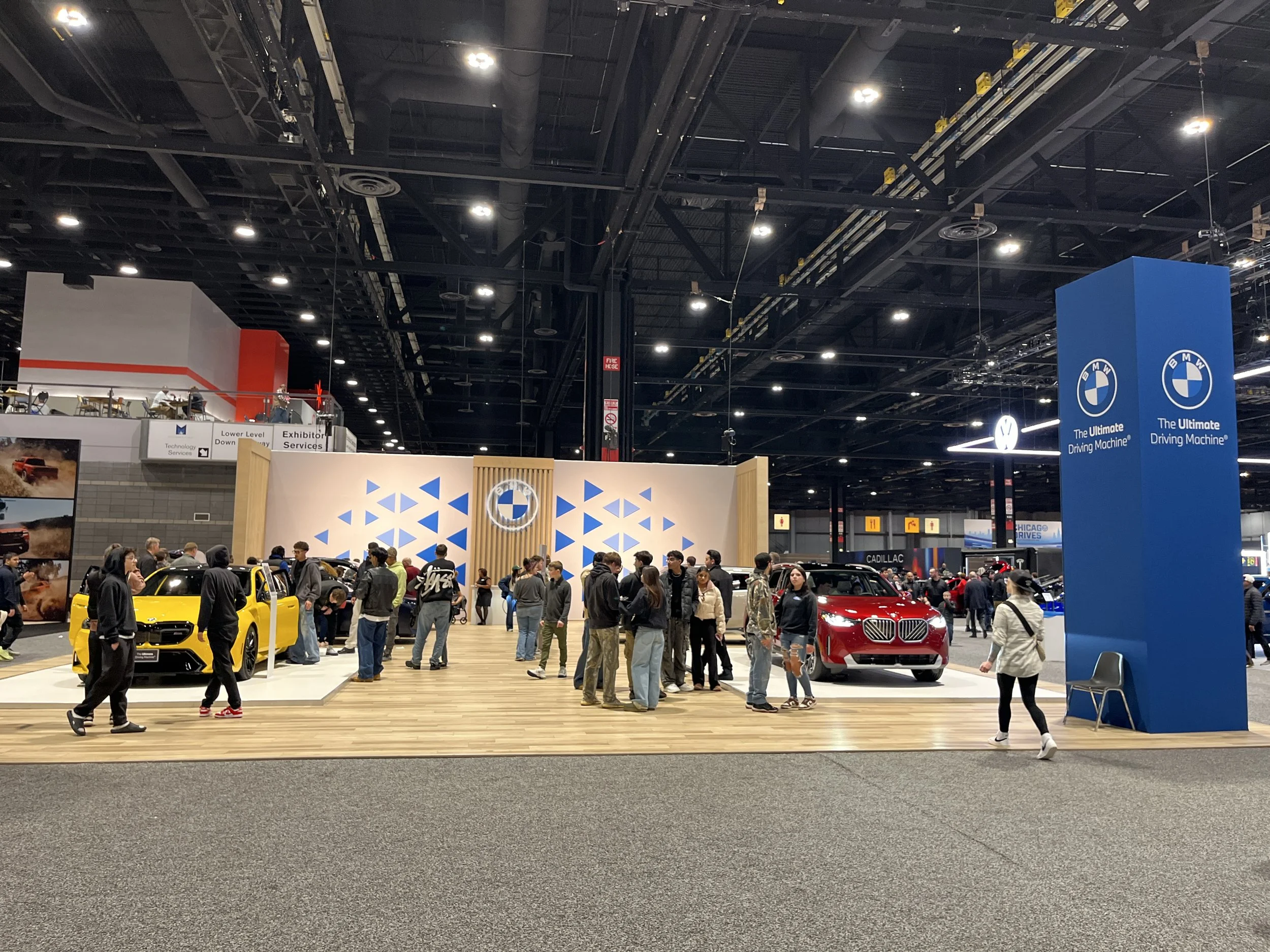
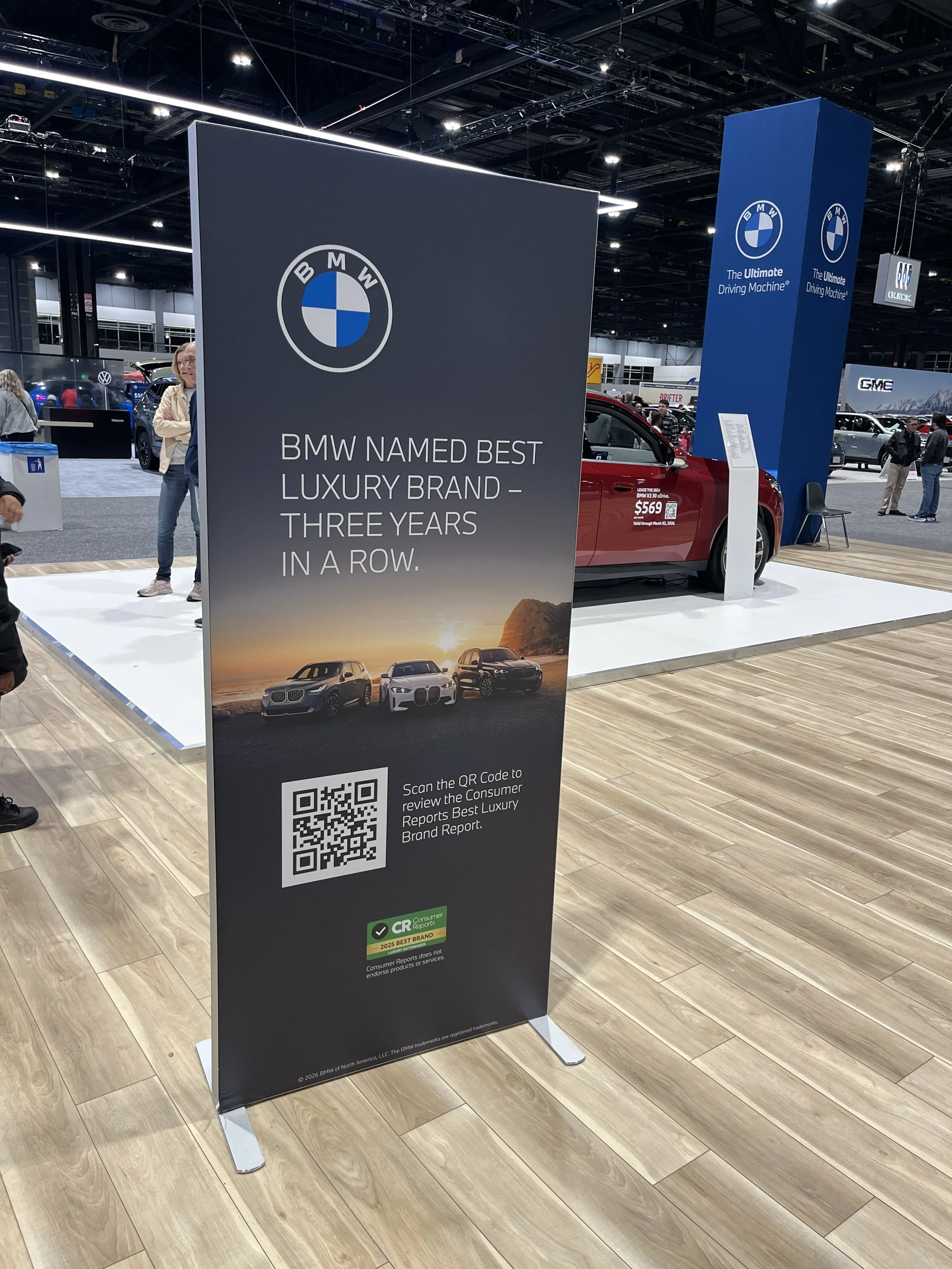
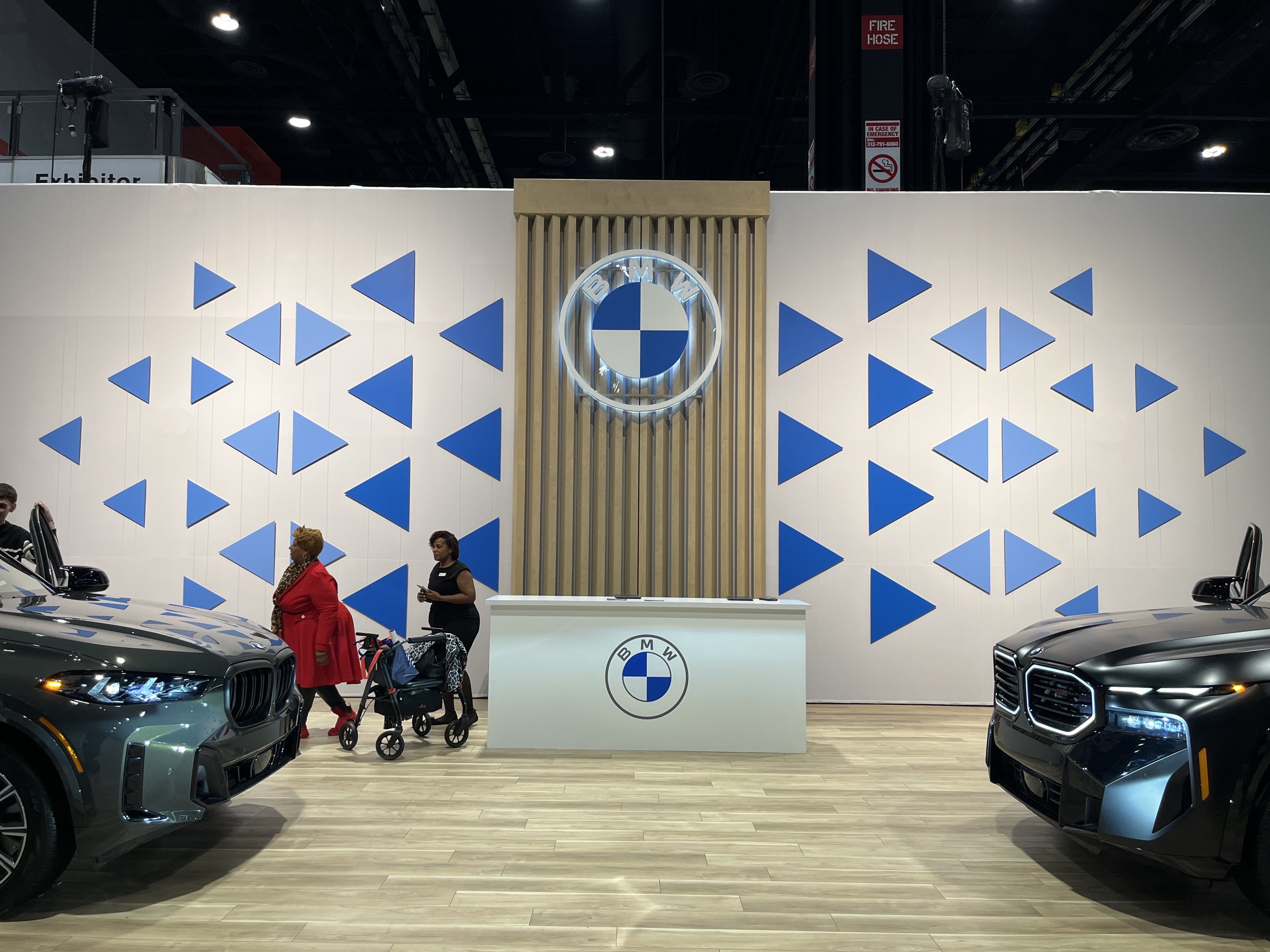
BMW’s booth felt almost residential and IKEA-esque, blending light wood tones with vibrant blues and white neon accents with a design language reminiscent of modern Scandinavian interiors. The approachable aesthetic made the space feel curated rather than corporate.
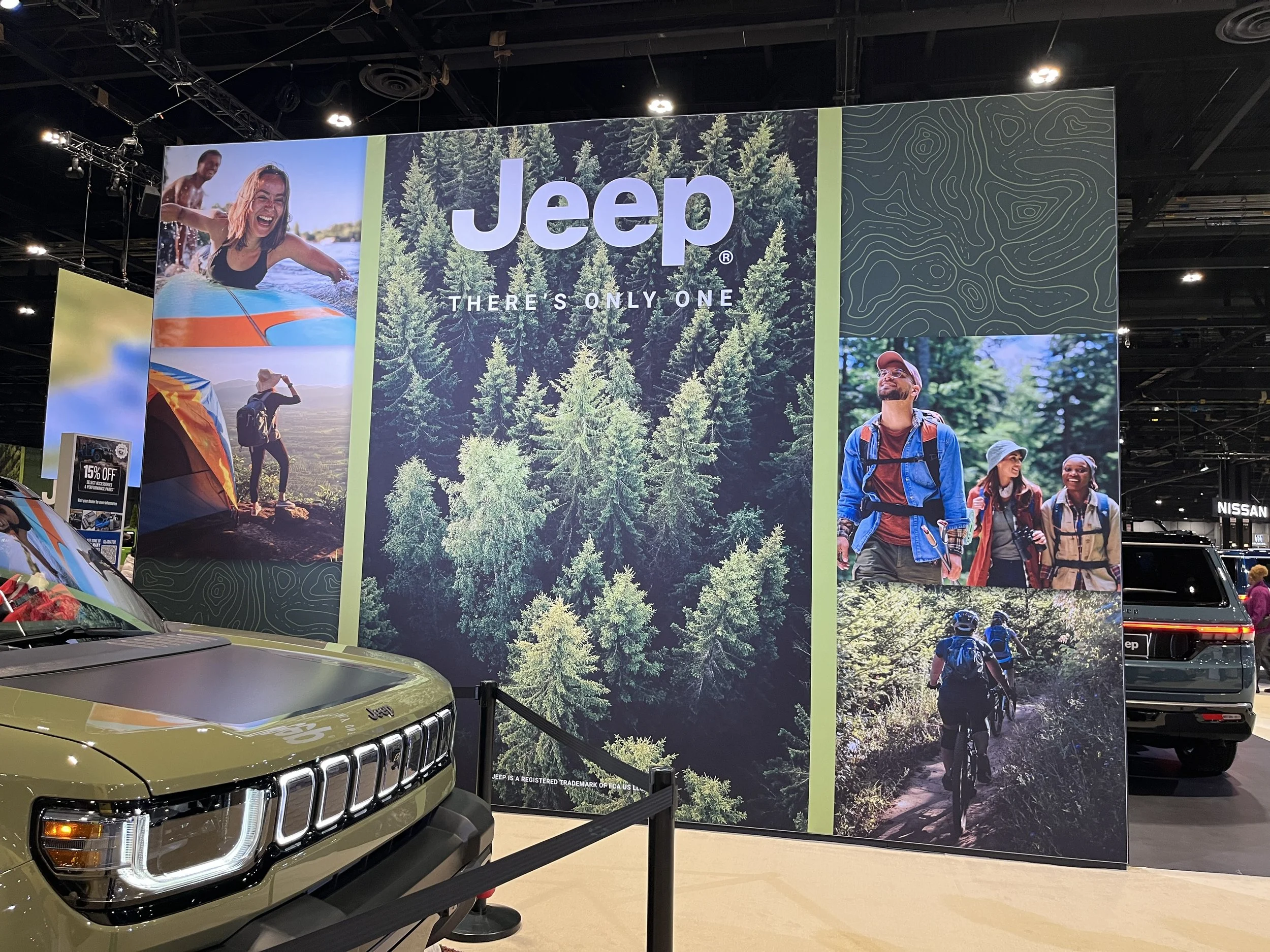
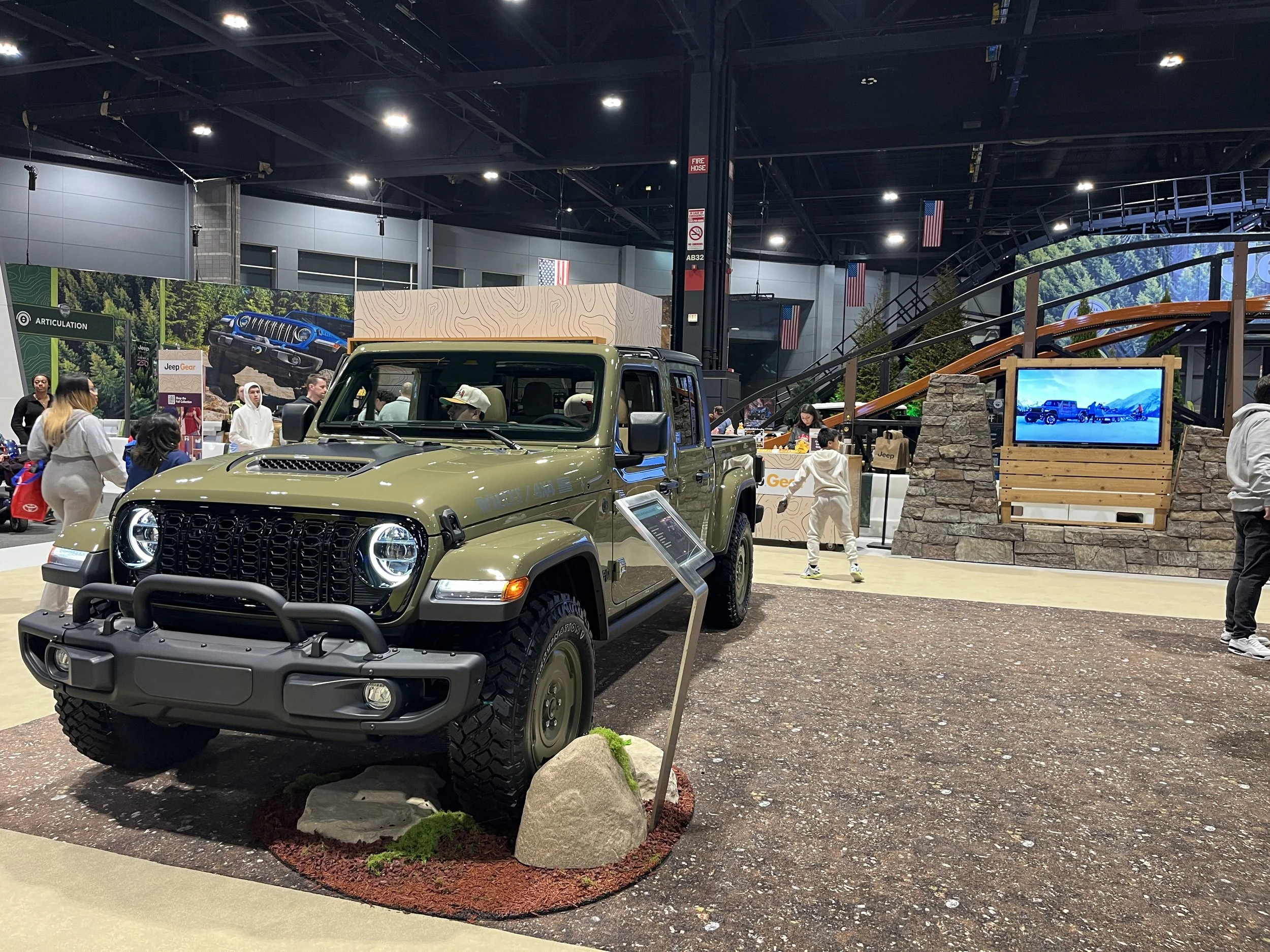
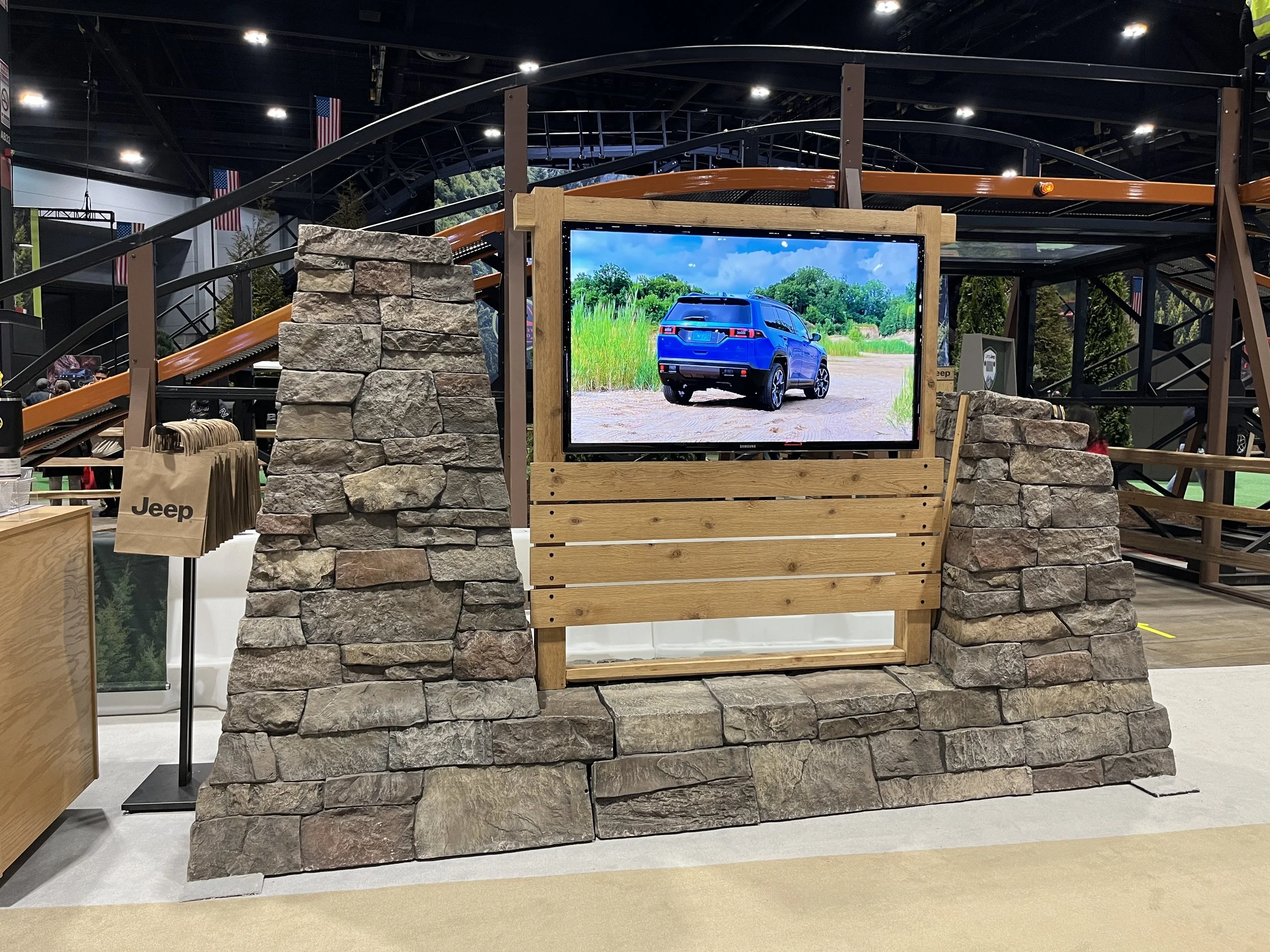
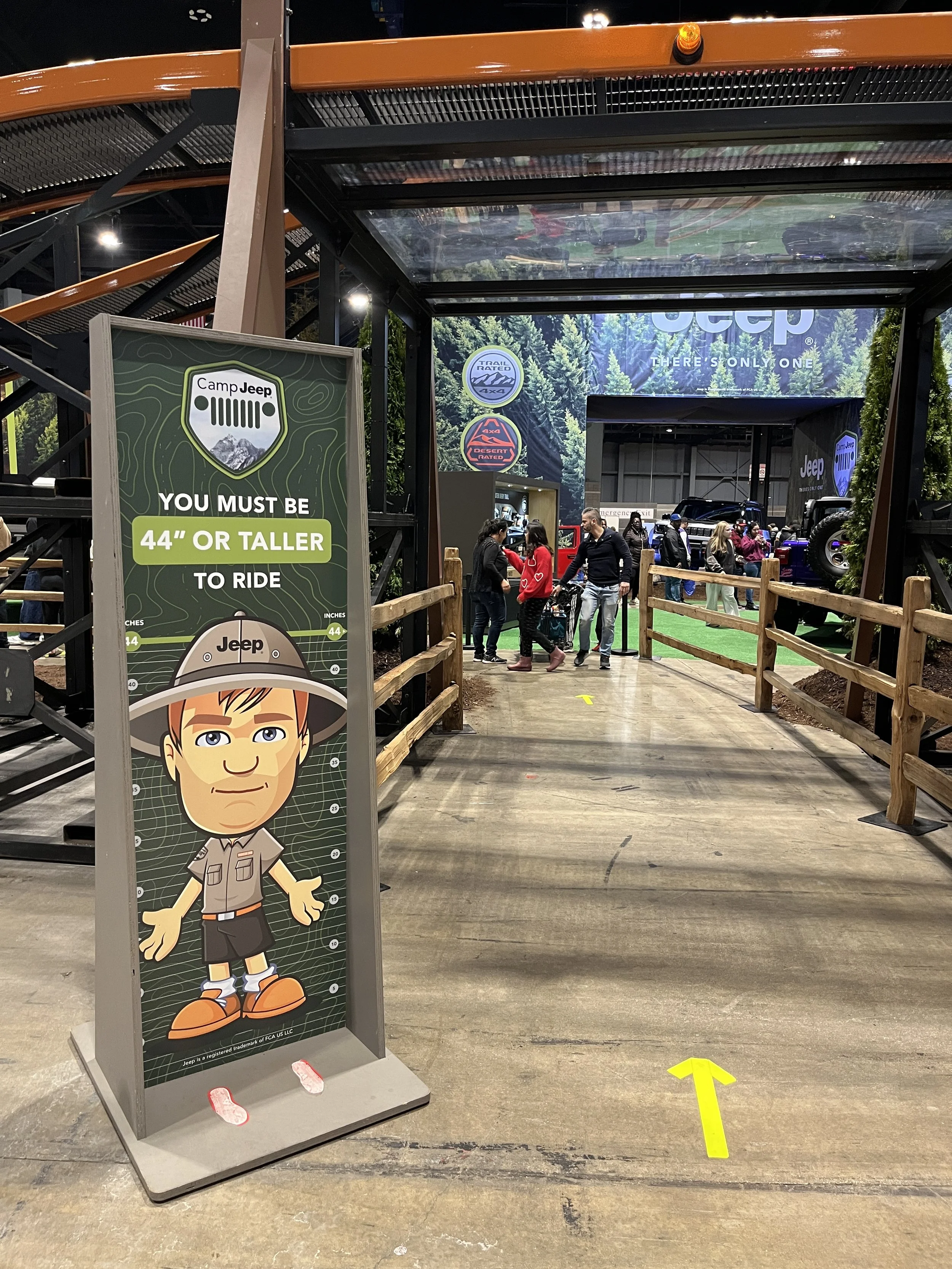
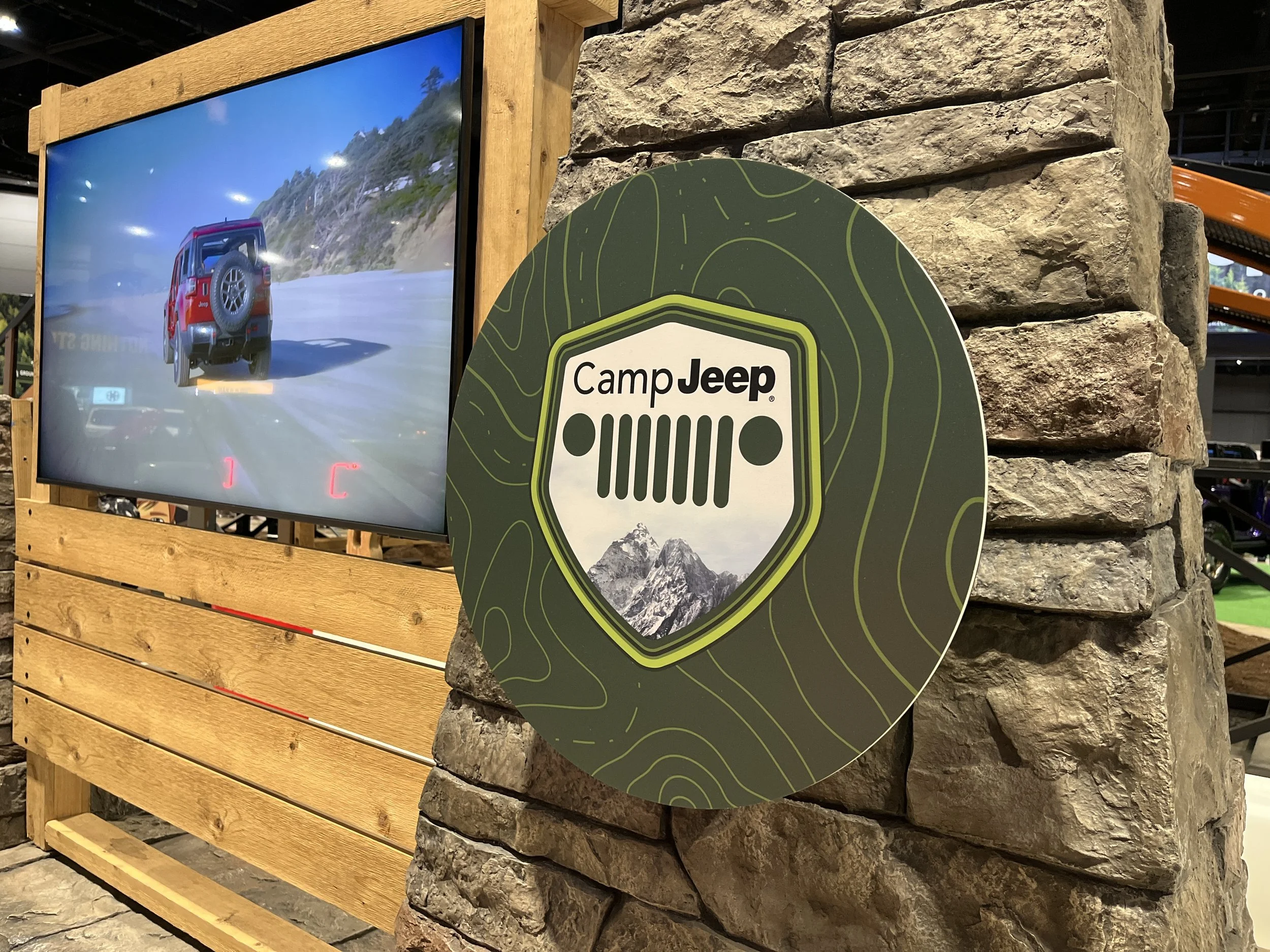
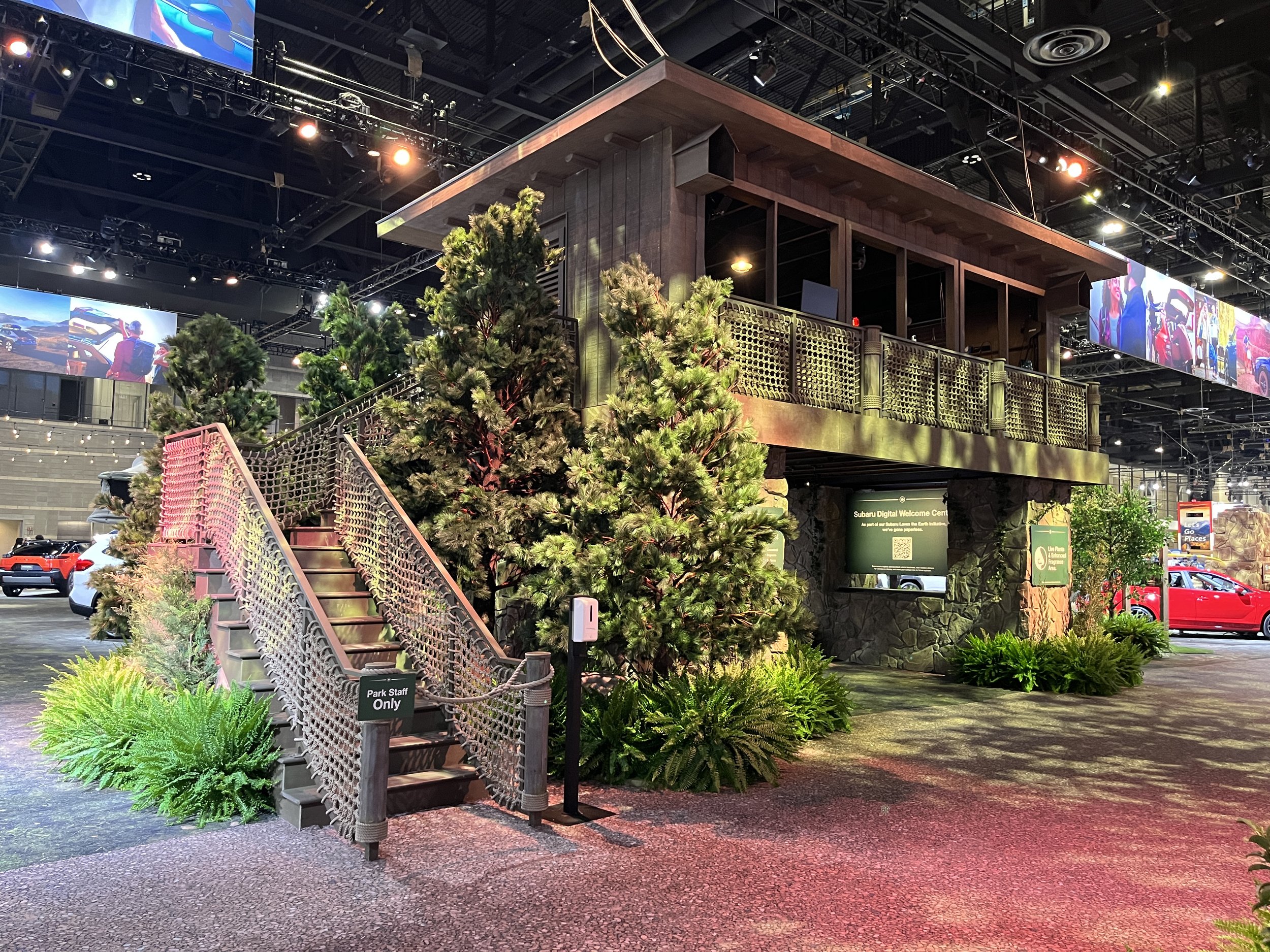
It’s impossible to attend the Chicago Auto Show and not make note of Jeep and Subaru’s immersive, earthy show environments. While these have always been some of our favorite brand presences, we were left underwhelmed by the lack of evolution or additions from previous year’s shows.
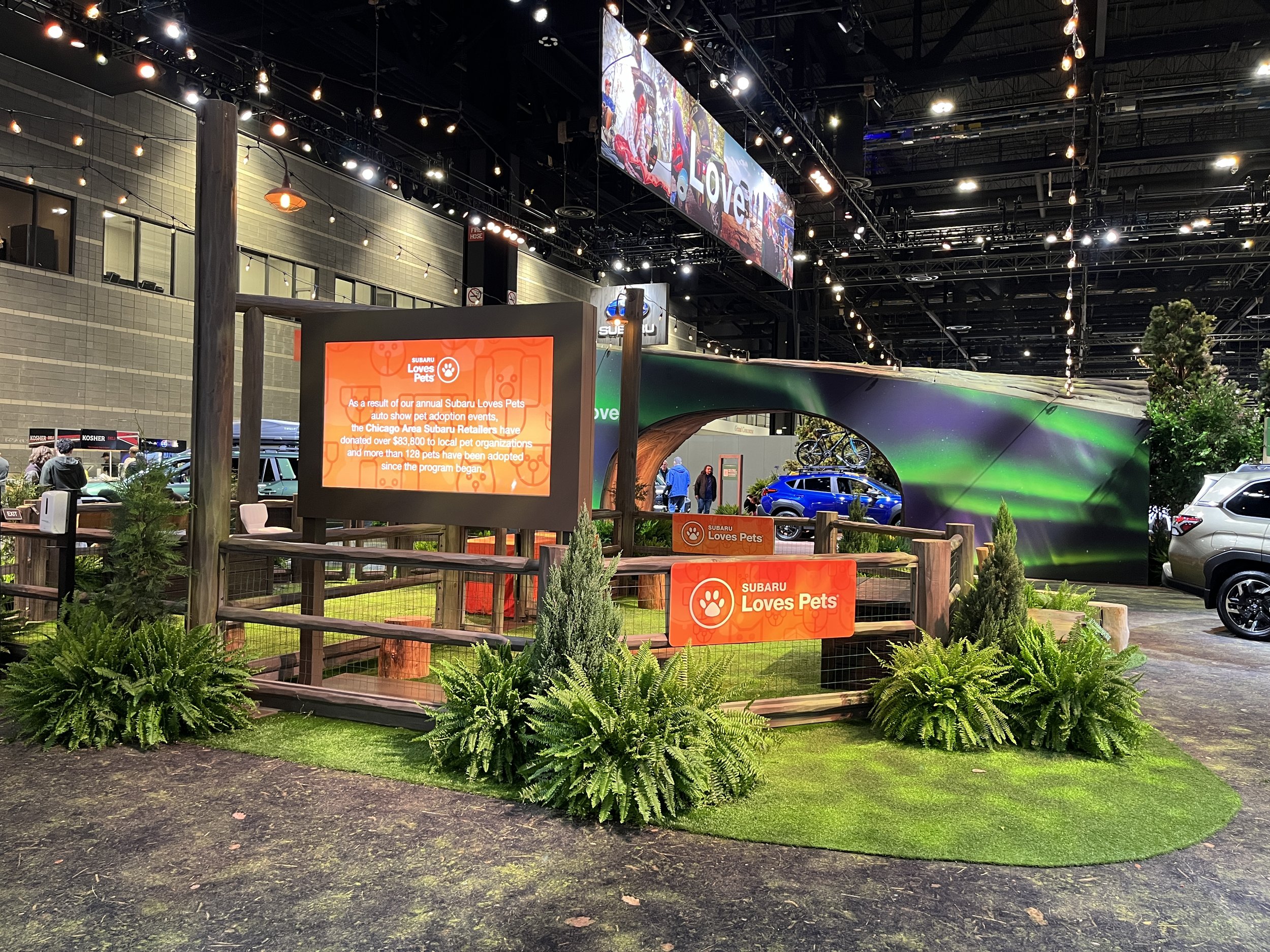
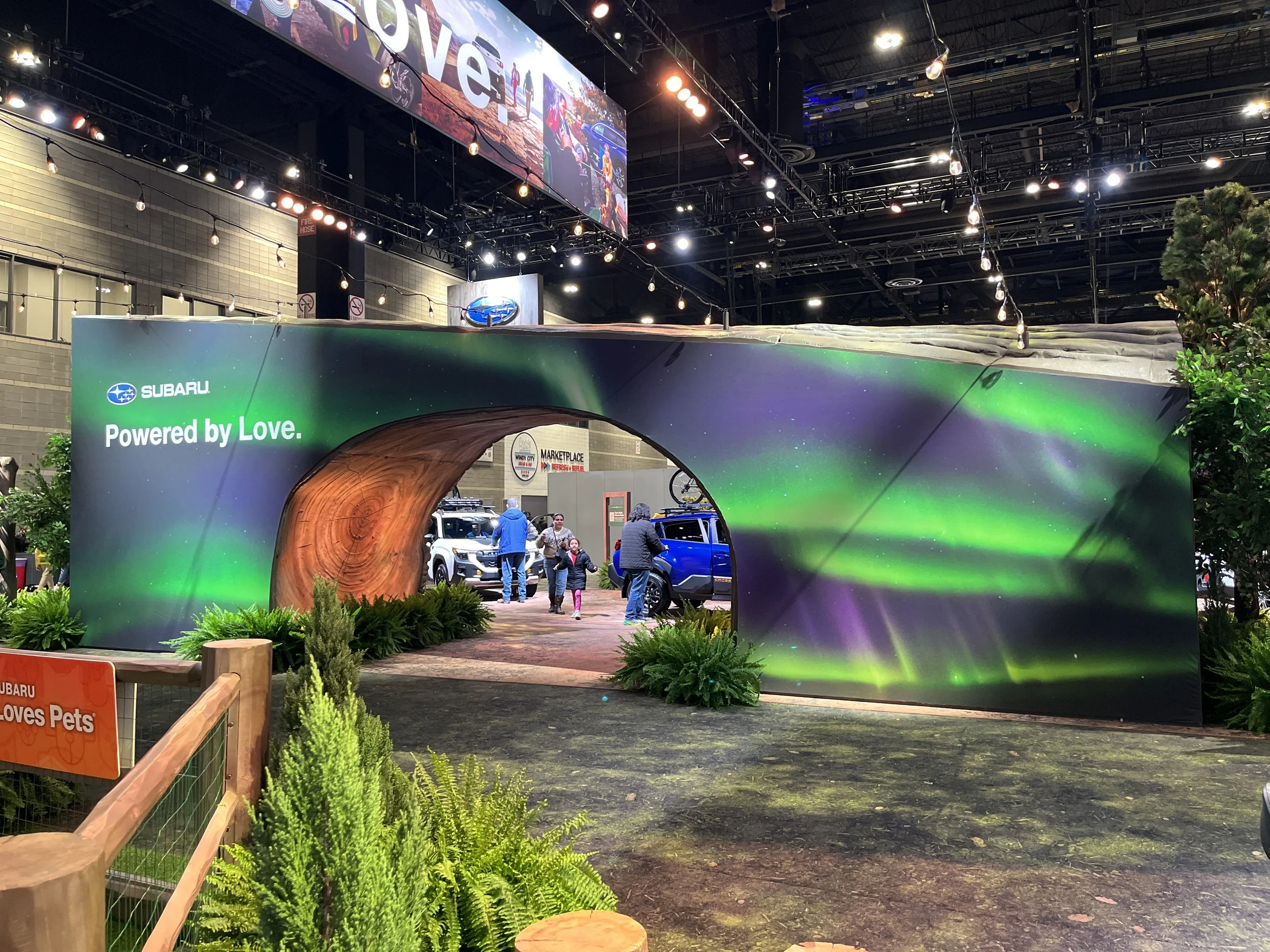
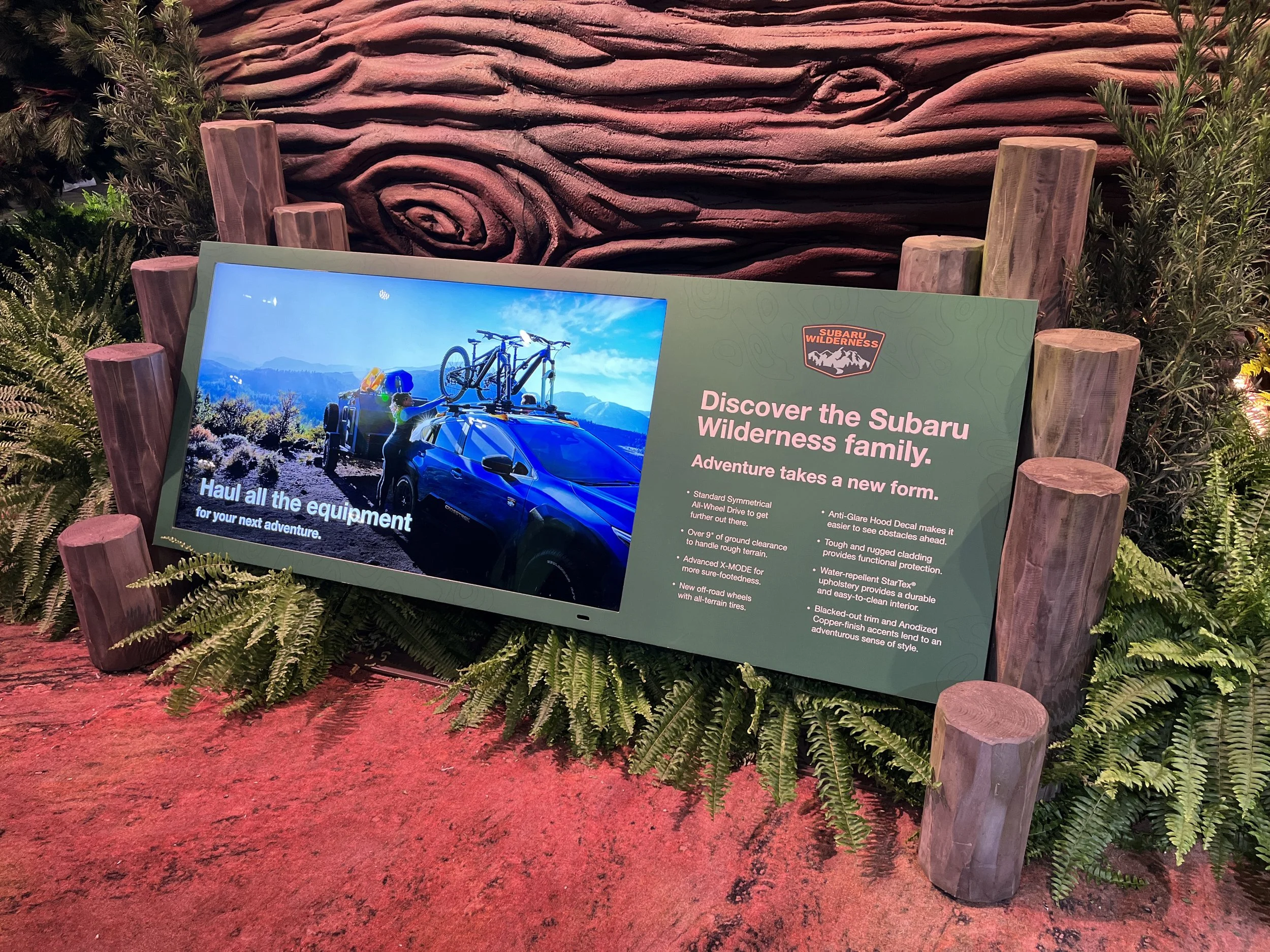
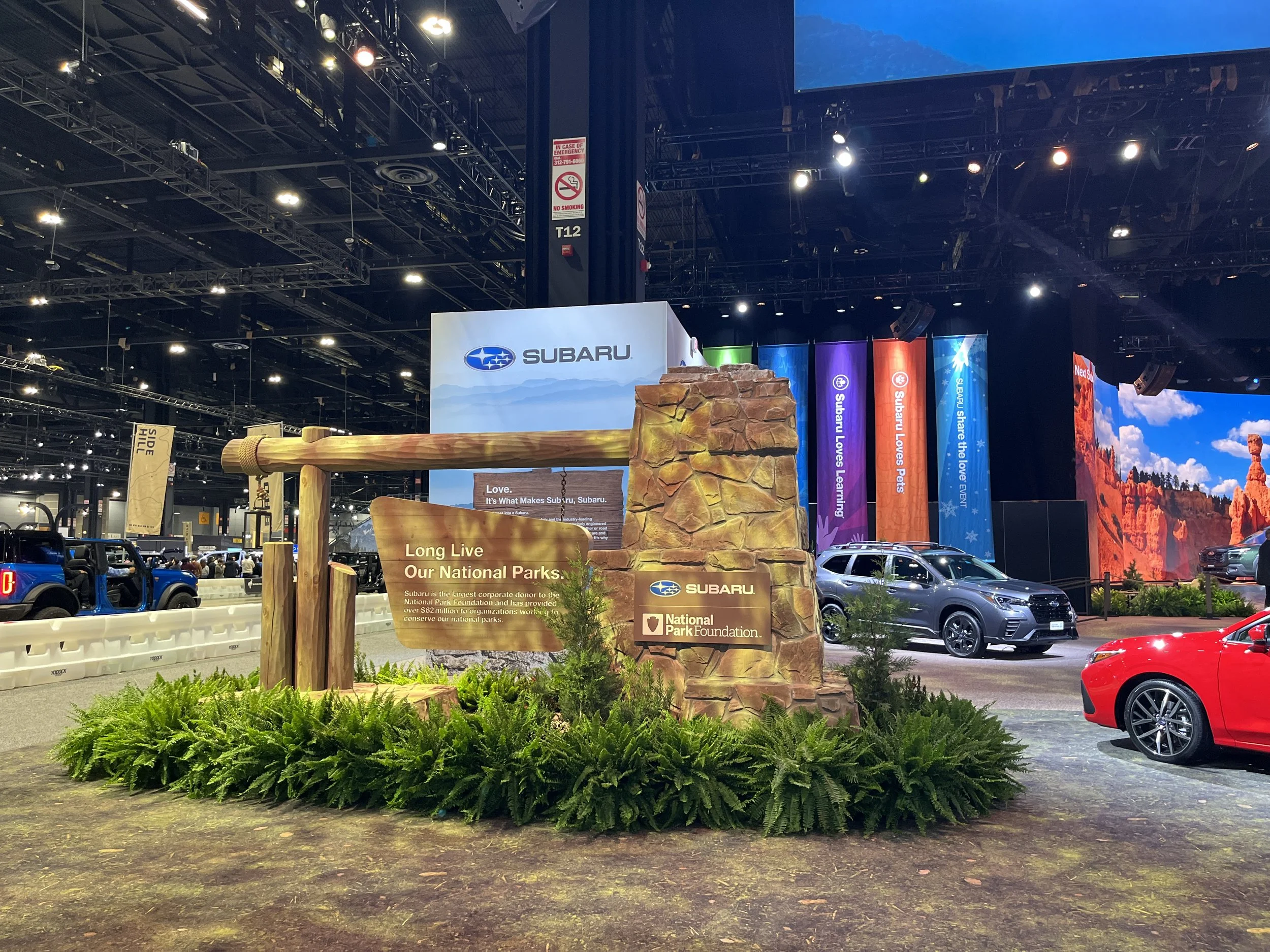
America’s Largest Auto Show At Half Its Former Size
While we walked away from the Chicago Auto Show inspired by design, we couldn’t help but notice that this year felt different. Historically spread across both sides of McCormick Place, the 2026 show occupied only one hall, feeling roughly half the size of past years. Several major manufacturers were absent, including Mercedes-Benz, Audi, Porsche, Mazda, Land Rover, Volvo, Genesis, Mini, Jaguar, Mitsubishi, Lincoln, and Rivian. Infiniti and Acura lacked official corporate presences, and even brands that participated often scaled back significantly. For example, we were left wanting more from the EV design pioneer, Tesla.
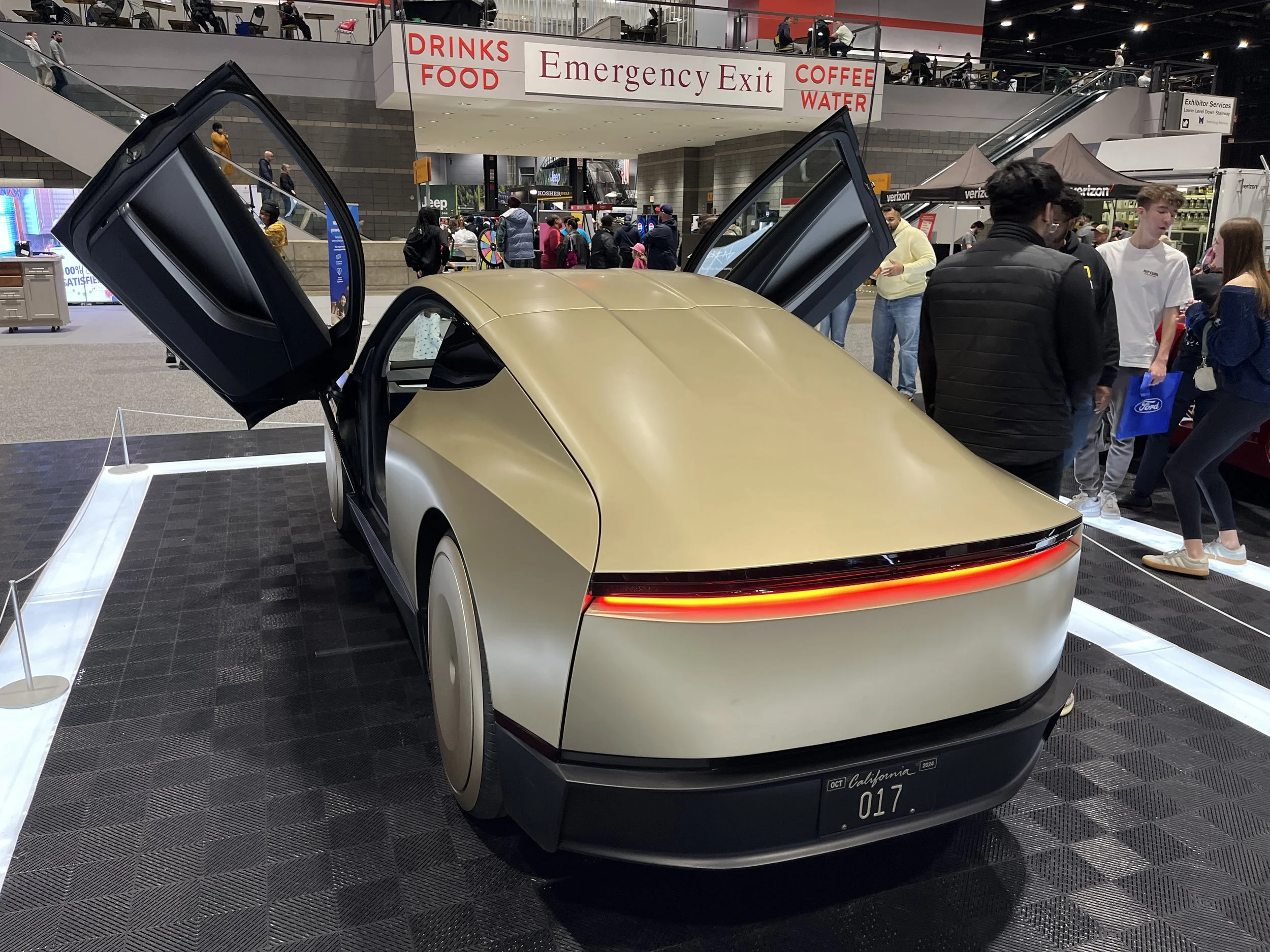
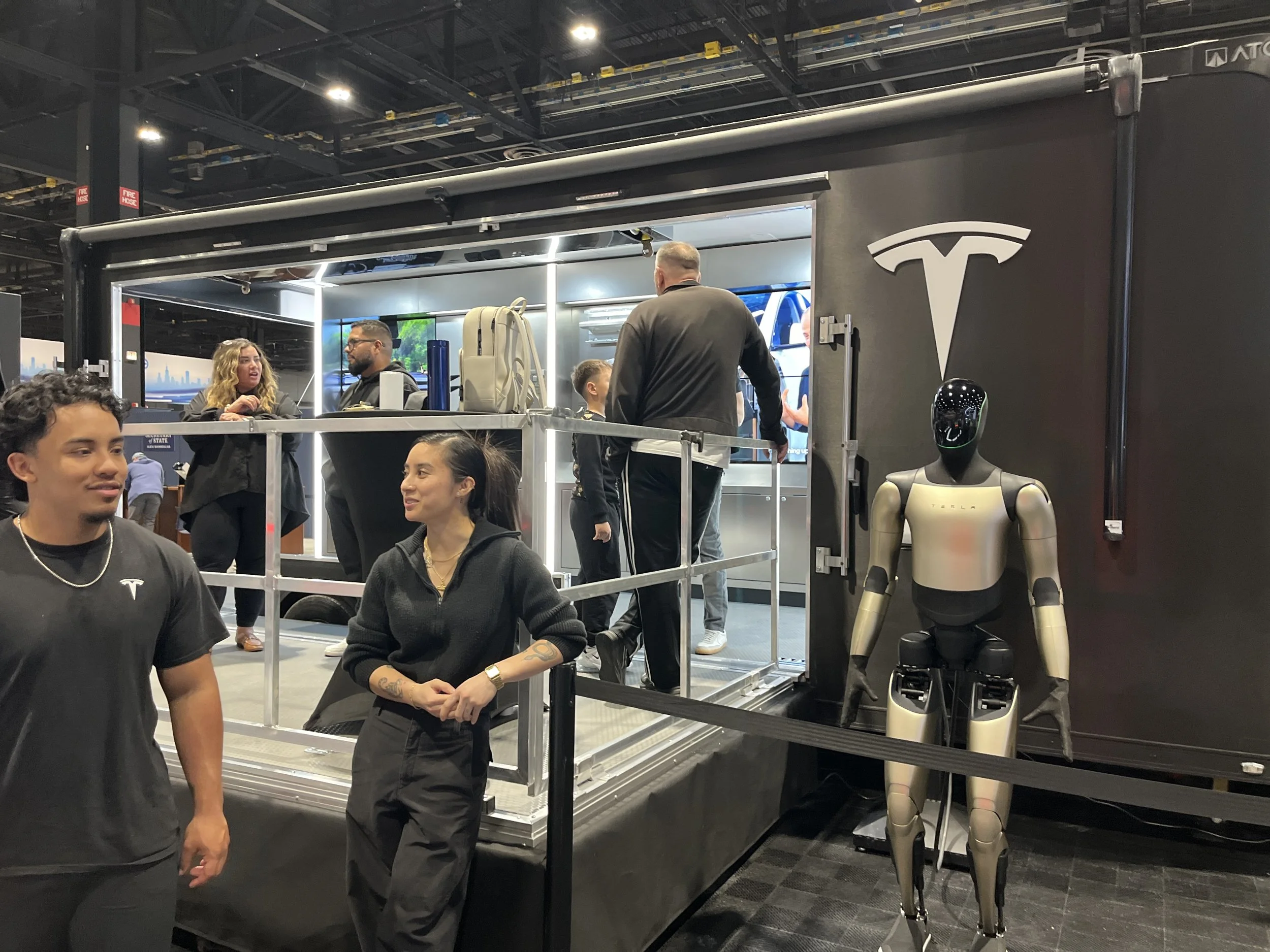
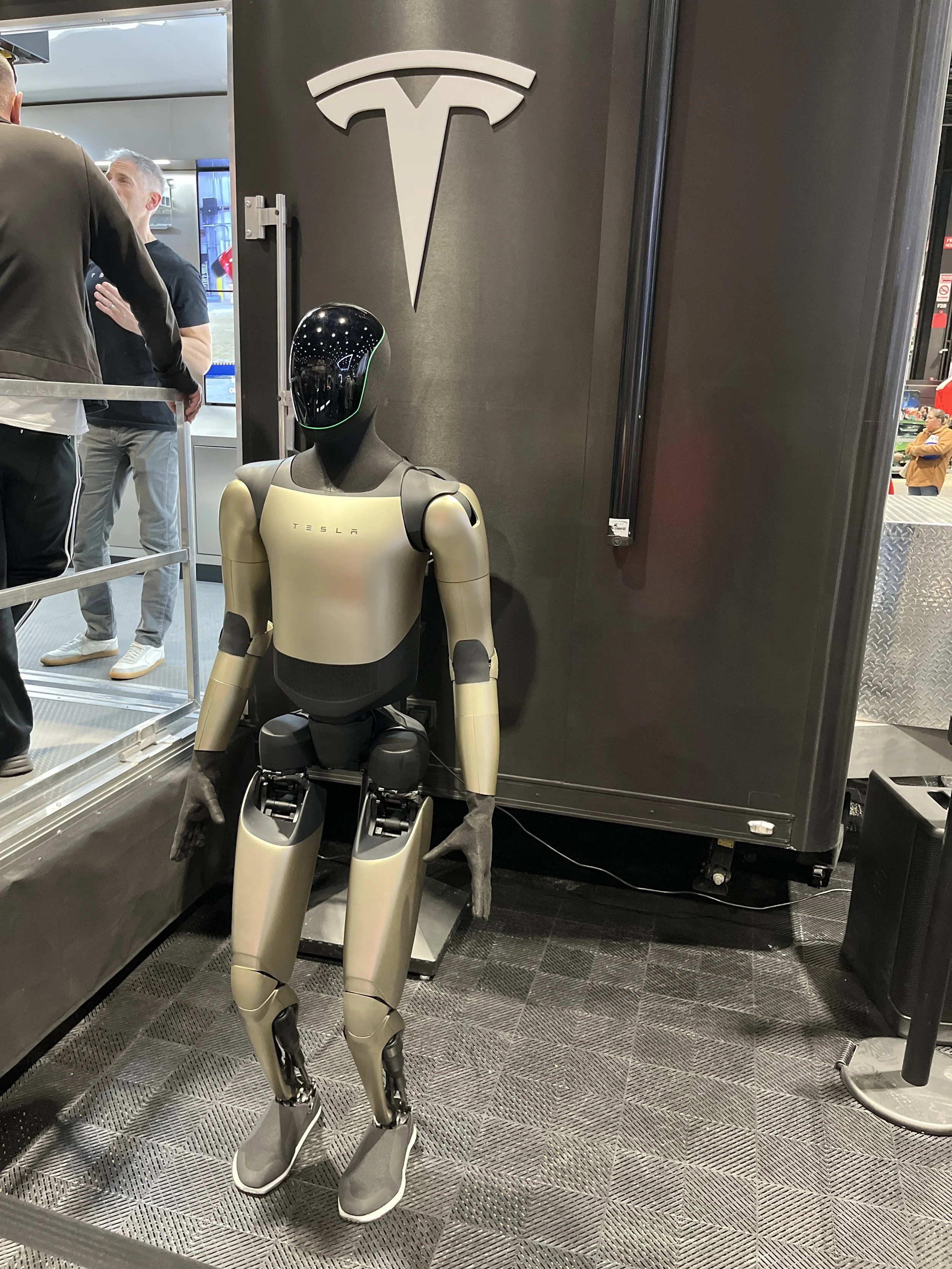
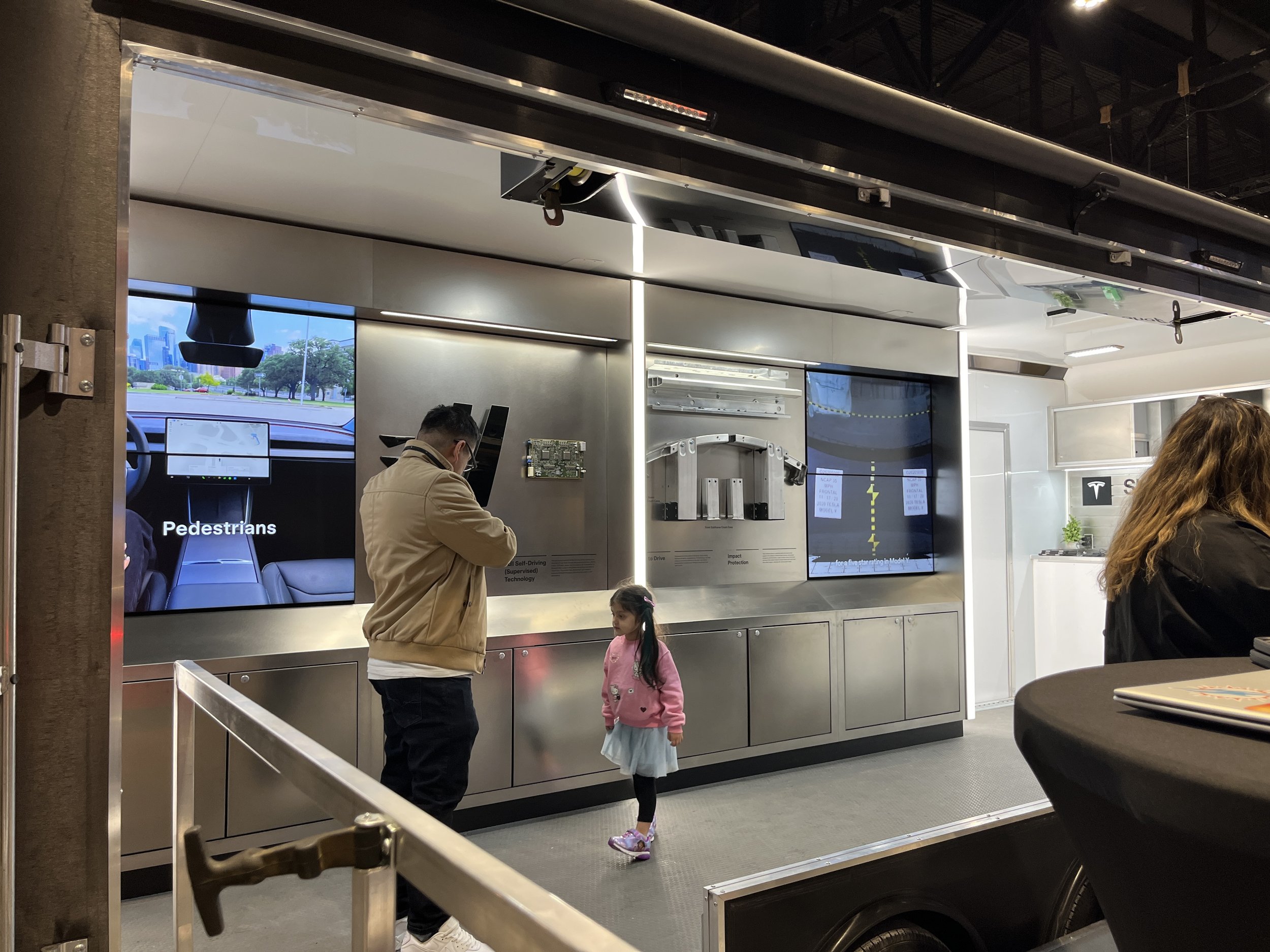
It’s no secret that traditional auto shows aren’t what they once were. Massive concept debuts and theatrical brand spectacles have increasingly given way to smaller footprints and dealer-driven displays. Chicago Auto Show used to be known as America’s largest, and it’s apparent it hasn’t been spared by this shift.
Despite the smaller scale, the show still offered valuable insight into how brands are evolving their retail storytelling, especially as physical experiences compete with digital engagement.
Our Takeaways
The 2026 Chicago Auto Show may have been smaller, but it revealed a shift that extends far beyond the automotive industry. As digital experiences grow, physical environments must work harder to create connection, emotion, and memorability.
For us at Innovative Marketing Solutions, our big takeaway is the most successful environments aren’t just displays, they’re branded experiences that bring a brand’s world to life. Whether on a show floor or at retail, that’s where great design continues to drive impact. If you want to learn more about how Innovative may be able to help your project succeed, head over to our contact us page. Let’s make an impact at retail!